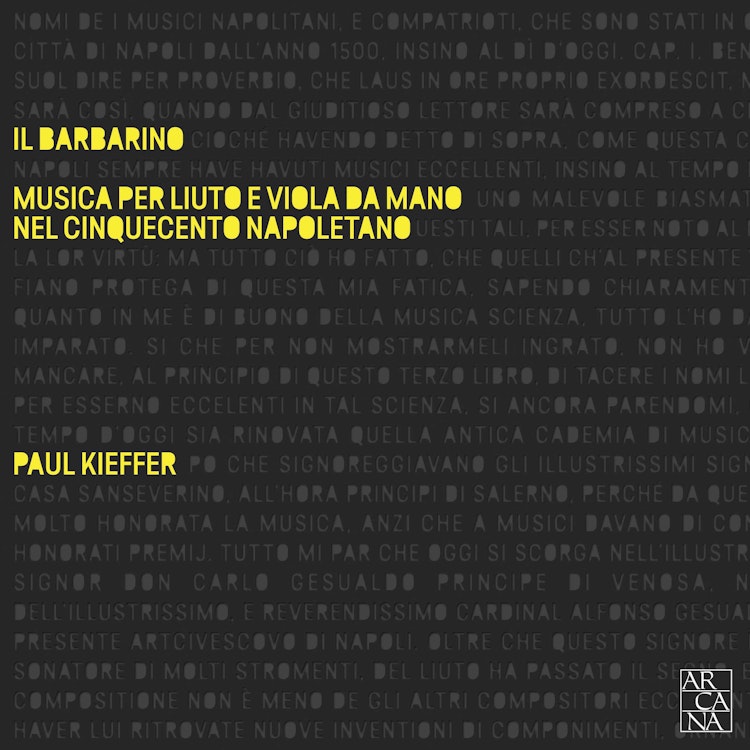
In Renaissance Naples, the lute was widely played by diverse social classes, especially the nobility, who saw it as the reincarnated lyre of Orpheus.
Album & Artwork
The album's graphic design, created in collaboration with 5+1AA Architecture Agency, projects elements from their major architectural projects, such as the Marseilles Docks.
Instruments
The term 'lute' in Naples also encompassed the guitar-shaped viola da mano, which derived from the Spanish vihuela, and both instruments were interchangeable.
Compositional Technique
Neapolitan lutenists favored abstract genres like fantasias and ricercars, which were often built from memorized passages and processes assembled during performance.
Historical Context
The publication of Francesco da Milano's music in Naples in 1536 may have been an homage to Emperor Charles V, whose entry into Naples in late 1535 was a magnificent public celebration.
Composer Biography
Fabrizio Dentice, a key figure in Neapolitan lute music, was a nobleman who disdained being called a 'lute player' because he believed it would compromise his noble status.
Recording & Production
The Barbarino lute book, a 400-page anthology compiled around 1600, was lost for over 40 years after World War II before its rediscovery.