Schubert's Gesang der Geister über den Wassern, D 714, was met with incomprehension at its 1821 premiere, with the audience perceiving it as 'an accumulation of all types of musical modulation and changes of key, without sense, order or purpose'.
Compositional Technique
Brahms's Geistliches Lied, Op. 30, is a double-canon study where the four voices are led in pairs (soprano/tenor, alto/bass), with the higher voice entering a ninth above the lower.
Composer Biography
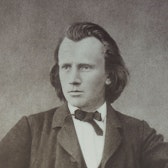
Johannes Brahms was a passionate and successful choral conductor, directing several choirs including the Detmolder Hofchor and the Wiener Singakademie.
Composition History
Brahms's Geistliches Lied, Op. 30, was mostly composed in 1856 during his time in Düsseldorf, shortly before Robert Schumann's death.
Composition History
Brahms's Zigeunerlieder, Op. 103, were inspired by 25 adaptations of Hungarian folk songs presented to him by Viennese businessman Hugo Conrat in 1887.
Composer's Artistic Vision
Brahms's motet Warum ist das Licht gegeben dem Mühseligen, Op. 74 No. 1, is a creative adaptation of Bach's motet style, reflecting Brahms's lifelong interest in the motet genre.
Performer Biography
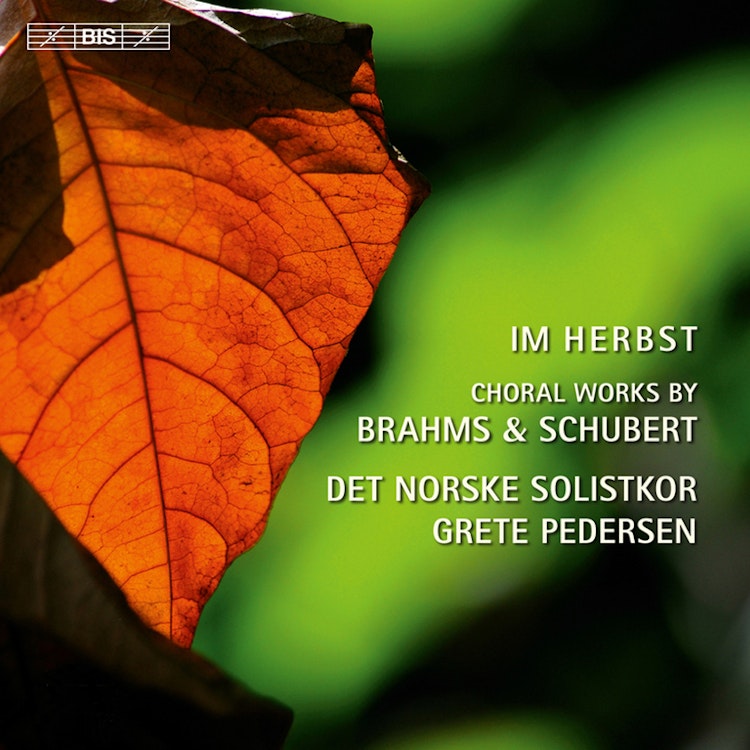
Det Norske Solistkor (the Norwegian Soloists' Choir) was established in 1950 with the aim of being an elite ensemble for performing choral music to the highest possible standard.
You might also enjoy...
Vaughan Williams: Earth's Wide Bounds
Baltic Voices 1
Poulenc: Figure humaine, Motets
Perspectives on Schubert: The Complete Choral Works for Male Voices by Franz Schubert, Vol. 6
Berkeley: Crux Fidelis / Missa Brevis / 3 Latin Motets / A Festival Anthem