By 1650, Venice was known for its freedom from religious fanaticism and its permissive culture, offering sanctuary to persecuted people.
Composer's Artistic Vision
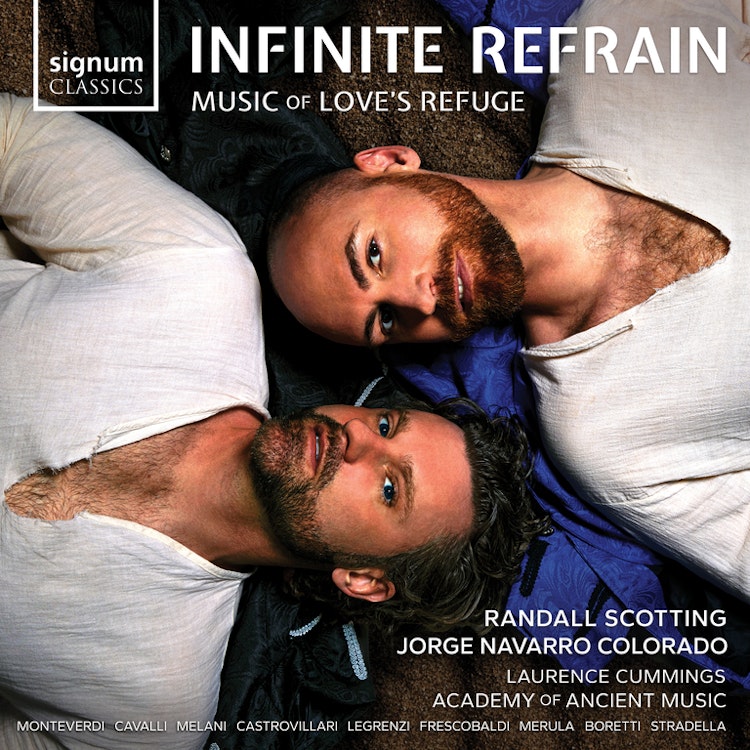
The album's title, "Infinite Refrain, music of love's refuge," references a love that has always existed and will continue, highlighting Venice as a safe haven for love.
Album & Artwork
This album is the first of its kind to explore the nuances of gay love in the 17th century through passionate duets and arias.
Cultural Impact
Venice's annual Carnival, with its masks and anonymity, became a major draw for gay tourism as the city's trading power declined.
Historical Context
After the separation of church and state in 1605, the autonomous Republic of Venice became an example of early Enlightenment concepts of social tolerance.
Interpretation
This recording aims to place the music of Monteverdi and his colleagues in its proper context, removing the influence of oppressive religious and social disapproval.
Compositional Technique
Monteverdi's Seventh Book of Madrigals, published in 1619, was a "gamechanger," with its sequence of 32 heterogeneous compositions feeling more like an opera than a collection of part-songs.
You might also enjoy...
Galuppi: Forgotten Arias of a Venetian Master
Caldara, A.: Daliso E Clori / Clori E Tirsi / Suonate A 3 in C Minor / Chaconne in B-Flat Major
Ignacio Jerusalem: Musicisti pugliesi in archivi ibericia