Chors der Hochschule des Saarlandes für Musik und Theater
Orchesters der Hochschule des Saarlandes für Musik und Theater
Isang Yun
Did you know?
1/7
Compositional Technique
Isang Yun's Octet for clarinet, bassoon, horn, and string quintet uses a 'main-tone technique' inspired by millennia-old Chinese and Korean court music, focusing on horizontal, flowing musical lines.
Composer Biography
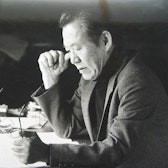
Isang Yun, the composer, grew up in the small, traditional harbor town of Tongyeong in southern Korea, which was then part of the Japanese Empire.
Composer's Artistic Vision
The text for "Om mani padme hum" was created by Wolf D. Rogosky specifically for Yun, who aimed to enrich Western vocal-symphonic tradition with Buddhist content and an East Asian-oriented style.
Composer's Artistic Vision
Yun stated that "Angel in Flames" was his last orchestral work for his people, intended as a memorial to innocent individuals who became victims of society, particularly young South Korean demonstrators who self-immolated.
Composition History
Isang Yun composed his last three works, including "Angel in Flames," in August 1994, completing the score for "Angel in Flames" on September 17 in Berlin-Kladow.
Composer's Artistic Vision
Yun, who initially studied European musical traditions, was interested in combining them with Asian traditions in his compositions.
Composition History
The work "Om mani padme hum" was commissioned retroactively by NDR Hanover on July 8, 1964, for a sacred choral work of approximately 18 minutes.