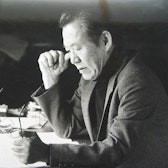
Isang Yun's Etudes for Flute(s) solo (1974) set new standards in both compositional and playing techniques, exploring the possibilities of virtuosic flute playing.
Composer's Artistic Vision
Yun's music often blends East and West, creating forms influenced by Sino-Korean court music but expressed through Western European avant-garde musical language.
Compositional Technique
The 'main tone' in Yun's music, derived from traditional Sino-Korean music, is characterized by a hard, accentuated attack, a long sustained center with dynamic and color variations, and a pointed fade-out.
Composer's Artistic Vision
Isang Yun, the composer, developed a 'main-tone technique' (Haupttontechnik) that is central to his compositions, including the works on this album.
Composition History
The Quintet for Flute and String Quartet (1986) was a commissioned work by Radio France and premiered in Paris in 1987 by Pierre-Yves Artaud and the Arditti Quartet.
Interpretation
Violinist Hansheinz Schneeberger created a trio arrangement of Yun's Gasa, adding instruments like marimbaphone, celesta, cimbalom, and various percussion to illuminate hidden tonal layers in the piano part.
Composer Biography
The second movement of the Quintet for Flute and String Quartet (1986) reflects on Isang Yun's experience of imprisonment, while the third movement symbolizes a new beginning.