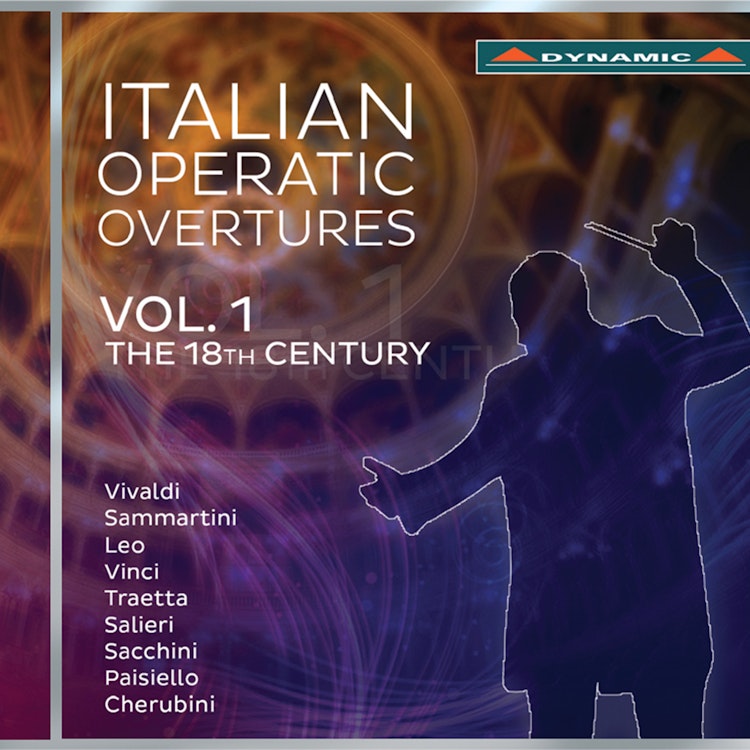
Italian Operatic Overtures, Vol. 1: The 18th Century
12/24/2016, 13 Tracks, 1:07:53
Featuring
Federico Maria Sardelli
Jean-Claude Malgoire
Augusto Ciavatta
Antonio Florio
David Golub
Gianluigi Gelmetti
Jean-Paul Penin
Giovanni Battista Rigon
Giuliano Carella
Valentino Metti
Dimitri Jurowski
Orchestra del Maggio Musicale Fiorentino
La Grande Écurie et la Chambre du Roy
Camerata del Titano
Cappella della Pietà de' Turchini
I Turchini
Orchestra Internazionale d'Italia
Arena di Verona Orchestra
Orchestra Sinfonica di Roma della RAI
Orchestre de la Camerata de Bourgogne
Orchestra della Fondazione Teatro Lirico Giuseppe Verdi di Trieste
Orchestra Filarmonica Italiana
Antonio Vivaldi
Giovanni Battista Sammartini
Leonardo Leo
Leonardo Vinci
Tommaso Traetta
Antonio Salieri
Antonio M. Gasparo Sacchini
Luigi Cherubini
Giovanni Paisiello
Did you know?
1/7
Composer Biography
Luigi Cherubini, whose overture concludes this album, was a precocious talent who achieved success at age fifteen and was highly appreciated by Beethoven in his adulthood.
Composition History
In the 18th century, operatic symphonies often had no thematic link to the opera itself; composers frequently reused existing pieces, even from other authors, due to time constraints.
Historical Context
Opera, born in Italy in the early 17th century, quickly evolved from a court entertainment to a popular genre accessible to anyone who could afford a ticket.
Composer Biography
Giovanni Paisiello, a prolific composer on this album, wrote almost 100 operas and was considered a leading figure of the Neapolitan school.
Composer Biography
Antonio Salieri, a composer on this album, was considered a main follower of Gluck's reform, and his opera Les Danaïdes was initially presented as Gluck's own work.
Composer Biography
Antonio Sacchini, another composer featured, was a rival of Gluck in Paris and a protégé of Queen Marie Antoinette.
Compositional Technique
The Italian 'Sinfonia' (overture) established itself in the late 17th century with a three-movement structure: Allegro-Adagio-Allegro, mirroring early concert symphonies.
You might also enjoy...
Knecht: Le Portrait musical de la nature - Philidor: Overtures
Musa Italiana
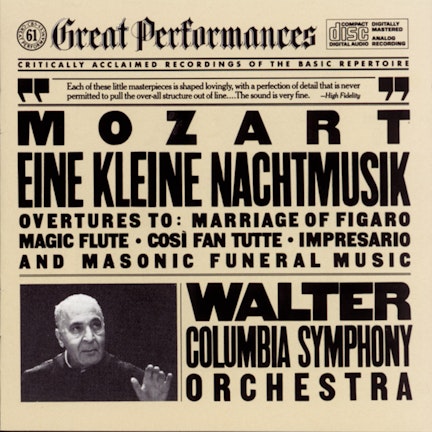
Walter Conducts Mozart
Mozart: Eine Kleine Nachtmusik; Opera Overtures; Masonic Funeral Music
ICON Sir Colin Davis
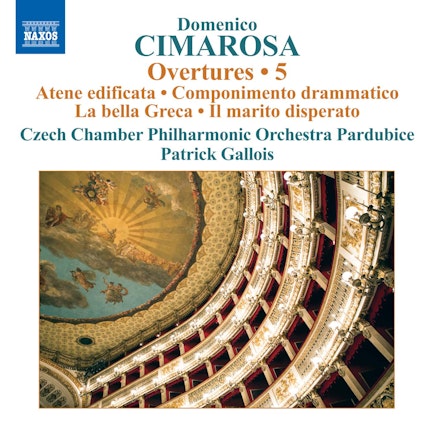
Cimarosa: Overtures, Vol. 5
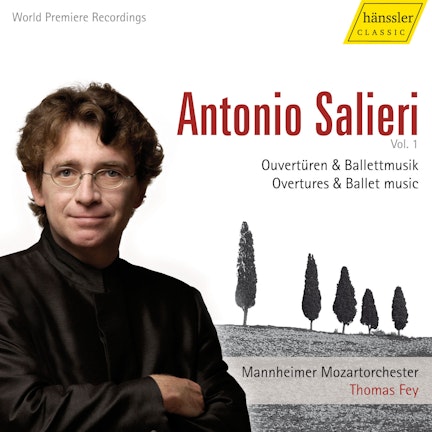
Salieri: Overtures and Ballets, Vol. 1 - Armida / Daliso E Delmita / Pafio E Mirra Ossia I Prigionieri Di Cipro / Der Rauchfangkehrer