The second movement of the Violin Concerto, Op. 15, titled 'aesthetics,' features harp, bells, and iridescent strings to create an enchanted atmosphere, with violin figures seemingly depicting bird flight from Richard Bach's book 'Jonathan Livingston Seagull'.
Composer's Artistic Vision
Eröd states that he is not a purist regarding stylistic means, believing that absolute originality of language is the enemy of communication and that musical language is an understanding.
Composer Biography
Following the suppression of the Hungarian Popular Uprising in December 1956, Iván Eröd fled to Vienna, Austria, to make a new start and continue his studies.
Composer Biography
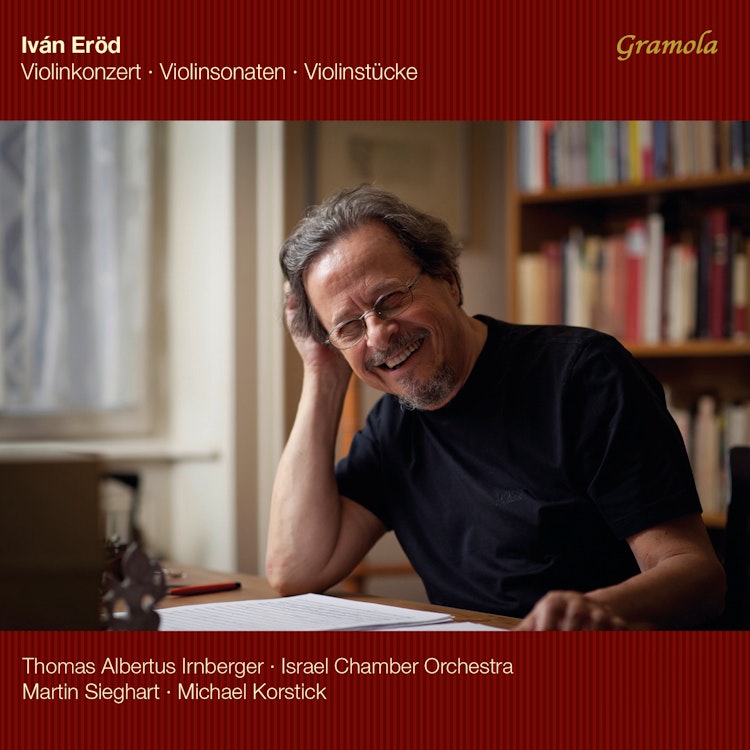
Iván Eröd, born in Budapest in 1936, experienced the horrors of the Holocaust as a child, losing several family members including his grandparents and brother.
Compositional Technique
The Three Pieces for Violin Solo, Op. 27, include a satirical response to dodecaphony, treating a seven-tone sequence strictly according to serial technique rules, and quoting the 'Fidelio' march.
Composer's Artistic Vision
Iván Eröd defines his compositional credo as 'Art is communication,' aiming for his music to be understood by a large number of people and to avoid overly difficult or noisy performances.
Composition History
The Violin Concerto, Op. 15, was dedicated to Iván Eröd's wife, whom he married in 1968, explaining the profound personal thoughts and emotions expressed in the work.