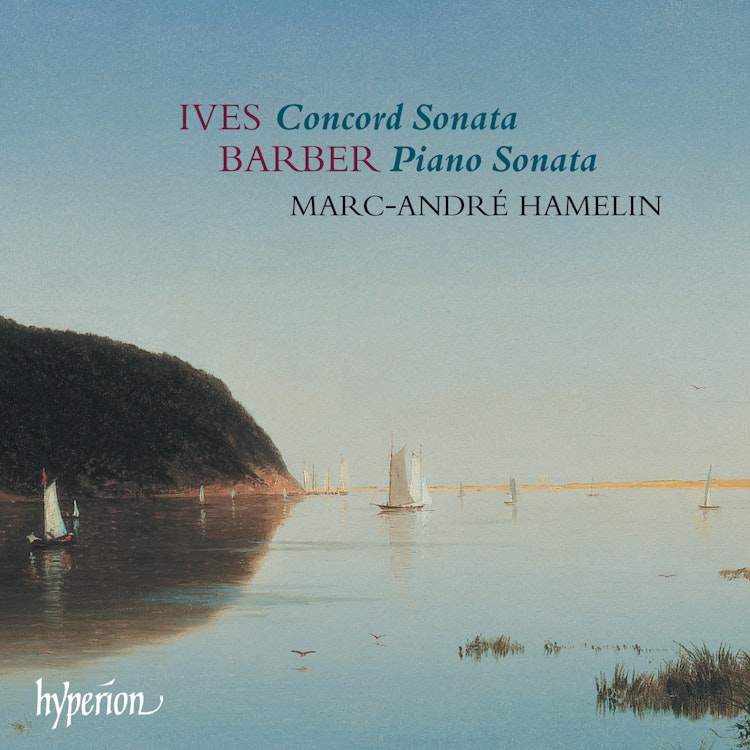
Charles Ives, the composer of the 'Concord' Sonata, deliberately isolated himself from mainstream musical fashion to forge his uncompromising, experimental style.
Notable Performances
The premiere performances of Samuel Barber's Piano Sonata by Vladimir Horowitz during the 1950-51 concert season quickly established the work in the international repertoire.
Composer Biography
Samuel Barber, composer of the Piano Sonata, was embraced by the American classical music establishment from the beginning of his career, with major ensembles and conductors premiering his works.
Composer Biography
Charles Ives's father, George Ives, encouraged his son's experimental musical thinking by having him sing in one key while he accompanied in another.
Composition History
Samuel Barber's Piano Sonata was originally conceived as a three-movement work, but pianist Vladimir Horowitz suggested adding a 'flashy last movement' which became the fugal finale.
Critical Reception
Ives's advanced musical idiom, with its complex textures and rhythms, was so challenging that it scared off musicians and audiences, and he only achieved fame and recognition in his final decade, long after he stopped composing.
Composition History
Ives's 'Concord' Sonata was conceived in 1911 to evoke key literary and philosophical figures of the Transcendentalist movement in Concord, Massachusetts.
You might also enjoy...
Boulez: Piano Sonatas Nos. 1-3
Galina Ustvolskaya: Piano Sonatas Nos. 1 - 6
Galina Ustvolskaya: Piano Sonatas Nos. 1 - 6
Russian Piano Music Series, Vol. 9 - Weinberg
Langgaard: Piano Works, Vol. 3
Koechlin: Works for Piano
Medtner: Piano Sonatas (Complete)
20th Century Piano Sonatas Vol. 1
Peyko: Complete Piano Music, Vol. 2
Ives: Piano Sonata No. 2 - John Harbison: Piano Sonata No. 1