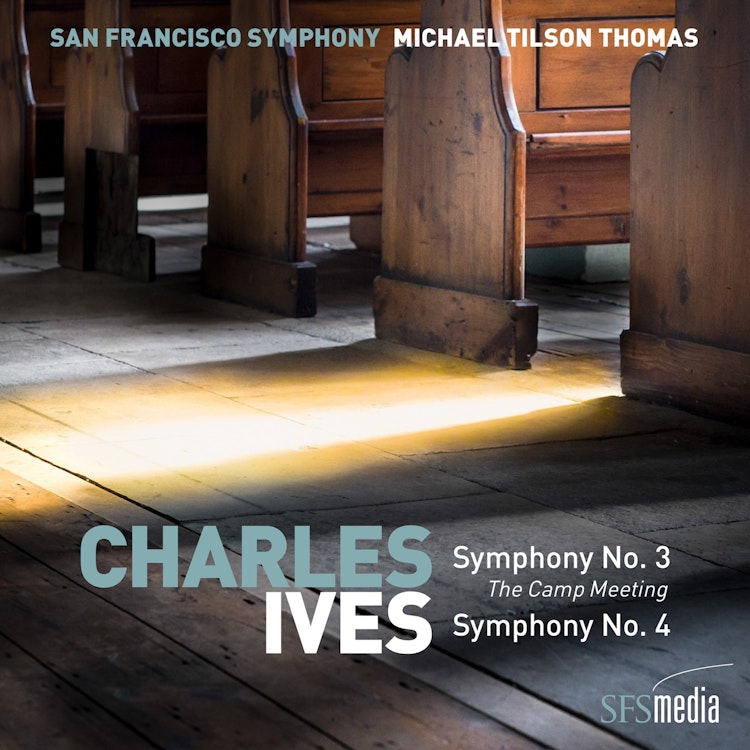
The American composer Charles Ives was profoundly influenced by hymns – a connection that Michael Tilson Thomas and the San Francisco Symphony and Chorus make explicit on their live recording of Ives's Third and Fourth Symphonies. Alongside the two symphonies are some of the American hymns that found their way into those scores. Both symphonies are highly complex works yet, as their use of hymns shows, also richly evocative.
Featuring
Michael Tilson Thomas
Peter Dugan
San Francisco Symphony
San Francisco Symphony Chorus
Carl G. Gläser
Charles Crozat Converse
Lowell Mason
Anonymous (Traditional)
William Batchelder Bradbury
Charles Ives
Joseph P. Webster
John R. Sweney
Heinrich Christopher Zeuner
Simeon Butler Marsh
Did you know?
1/7
Composer's Artistic Vision
A fundamental aspect of Charles Ives's musical language is quotation, where allusions to pre-existing music prompt listeners to make associations with the broader world.
Composition History
Charles Ives often tinkered with his compositions for years or decades, due to the unlikelihood of performance, making the chronology of his works complicated.
Compositional Technique
Charles Ives's Symphony No. 4 is a complex collage incorporating passages from his earlier compositions and a wide array of popular music, including parlor songs, marches, ragtime, and Protestant hymns.
Composer Biography
After graduating from Yale with a D-plus average, Charles Ives prospered as an insurance businessman, allowing him to compose music without needing public interest.
Performer Biography
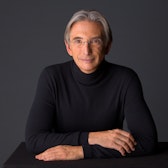
Michael Tilson Thomas, the San Francisco Symphony's Music Director since 1995, has won 12 Grammys, 11 of which are for his recordings with the SFS.
Notable Performances
Leopold Stokowski, an 83-year-old conductor known for new music, enlisted two additional conductors for the 1965 premiere of Ives's Symphony No. 4, highlighting its complexity.
Composer Biography
Charles Ives's father, a Connecticut bandmaster, encouraged his son's "open-earedness" by delighting in musical coincidences like overlapping sounds of separate bands.
You might also enjoy...
Abendlieder/Night-Time Songs
Schubert, F.: Choral Music
Franz Schubert: An die Sonne. Chormusik mit Klavier
In The Beginning - Choral Masterpieces of the 1940's
Kenneth Leighton: Through the Powerful Darkness... Choral and Organ Music
Carr: Seven Last Words from the Cross
Legacy
Rejoice!
In The Stillness
Choral Concert: Tapiola Choir - Bergman, E. / Johansson, B. / Sallinen, A. / Rautavaara, E. / Kortekangas, O. (Dreams)