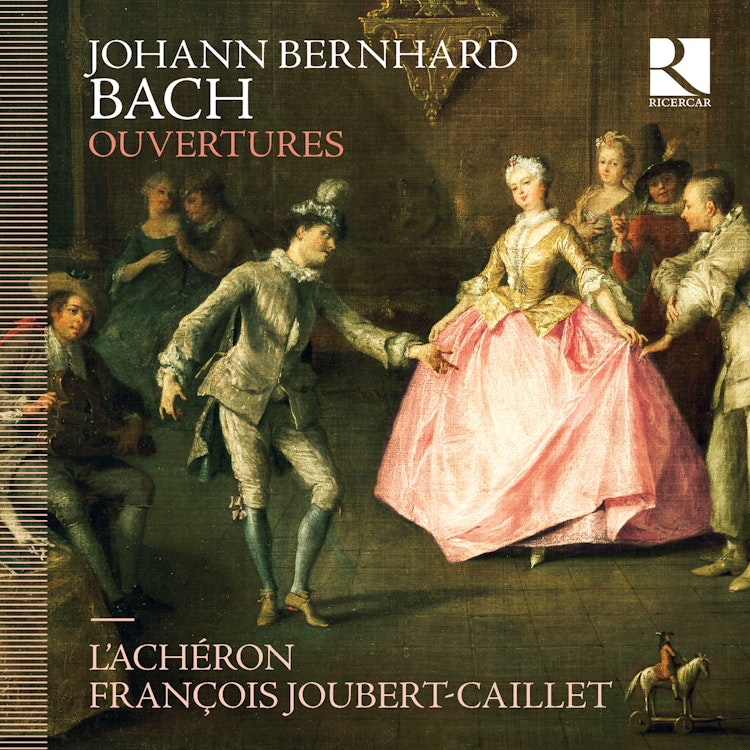
Johann Bernhard Bach, described as a 'true painter in sound,' created vivid country scenes and evoked specific emotions and situations in each movement of his Ouvertures.
Compositional Technique
The use of French titles for movements like 'Les Plaisirs' or 'Joye' in these Ouvertures reflects the influence of early 18th-century French musical practices and the association of the French language with elegance and aristocracy in Germany at the time.
Interpretation
The Achéron ensemble expanded to an orchestral size for this recording, aiming for artistic and sonic realism, and used varied and characteristic instrumentations to reflect Johann Bernhard Bach's intentions.
Composition History
Copies of three of Johann Bernhard Bach's Ouvertures (D major, G major, and G minor) were found among the effects of Carl Philipp Emanuel Bach, Johann Sebastian Bach's second son, suggesting they were used for Collegium Musicum performances around 1729-1730.
Composer Biography
Johann Bernhard Bach (1676-1749) was the second cousin of Johann Sebastian Bach's father and served as a chamber musician and organist in Eisenach.
Composition History
Only a small number of Johann Bernhard Bach's compositions have survived, including three chaconnes for harpsichord, several organ chorales, and the four Ouvertures featured on this recording.
Compositional Technique
Johann Bernhard Bach's Ouvertures are a German creation that combines elements typical of French music, such as the Lully-style ouverture and various French dance movements.
You might also enjoy...
Water Music Suites
Handel: Messiah, HWV 56
Händel: Music for the Royal Fireworks; Water Music Suite 1-3 - Sony Classical Masters
The Last Orchestral Works
Handel : Water Music & Music for the Royal Fireworks
Handel : Water Music & Musique pour les feux d'artifices royaux