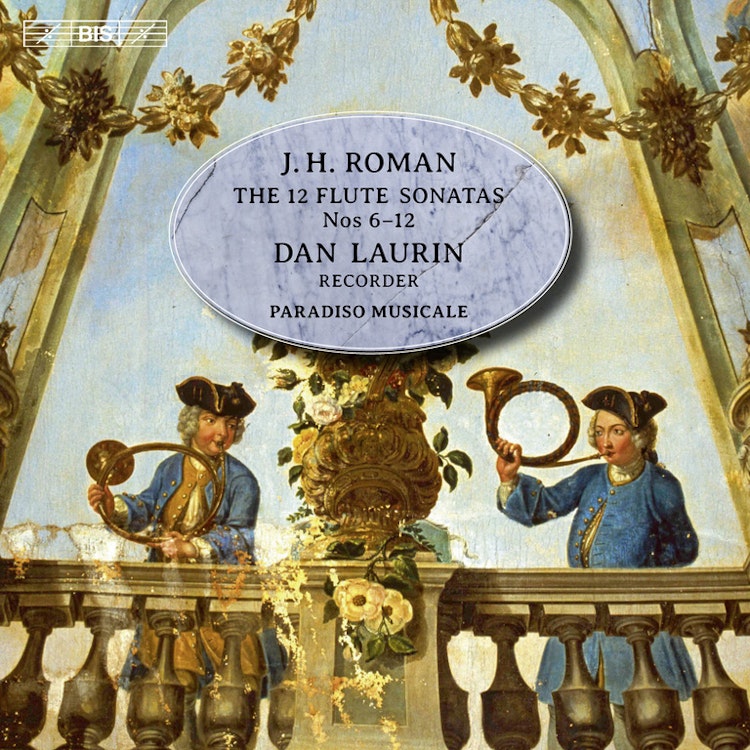
Georg Philipp Telemann, a prominent German composer, praised Roman's flute sonatas for their 'lively and very charming composition' and 'clean and accurate copper engraving' when he distributed them in Germany.
Compositional Technique
Roman's flute sonatas combine complex emotional contexts with folk music forms like the villanella or piva, and feature asymmetrical, irregular music with unexpected twists.
Interpretation
The performers on this album adopted an Italian style of continuo playing for Roman's sonatas, influenced by Gasparini's continuo tutor, which Roman himself translated into Swedish.
Composition History
Roman's flute sonatas are his only published works, dedicated to Queen Ulrika Eleonora the Younger as thanks for her support leading to his appointment as court Kapellmeister on her birthday in 1727.
Instruments
During Roman's time, transverse flutes were mainly for the nobility and bourgeoisie, while recorders were common across all social classes in Stockholm.
Composer's Artistic Vision
Johan Helmich Roman, the composer, rejected strict counterpoint in his flute sonatas, favoring emotion and the idea that music speaks to the heart.
Composer Biography
Johan Helmich Roman, known as 'the father of Swedish music', was the first Swedish composer of distinction and modernized Swedish music.
You might also enjoy...
Sammartini: Sonata for Flute and Basso Continuo, Op. 2, Nos. 1-6
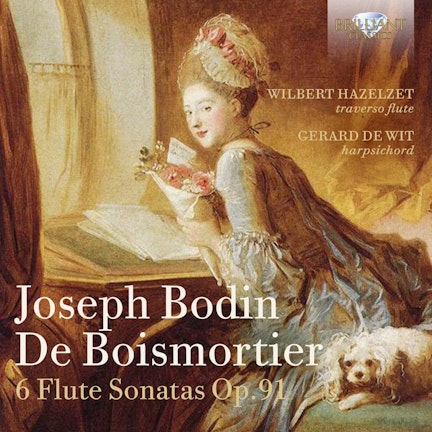
Joseph Bodin De Boismortier: 6 Flute Sonatas, Op. 91