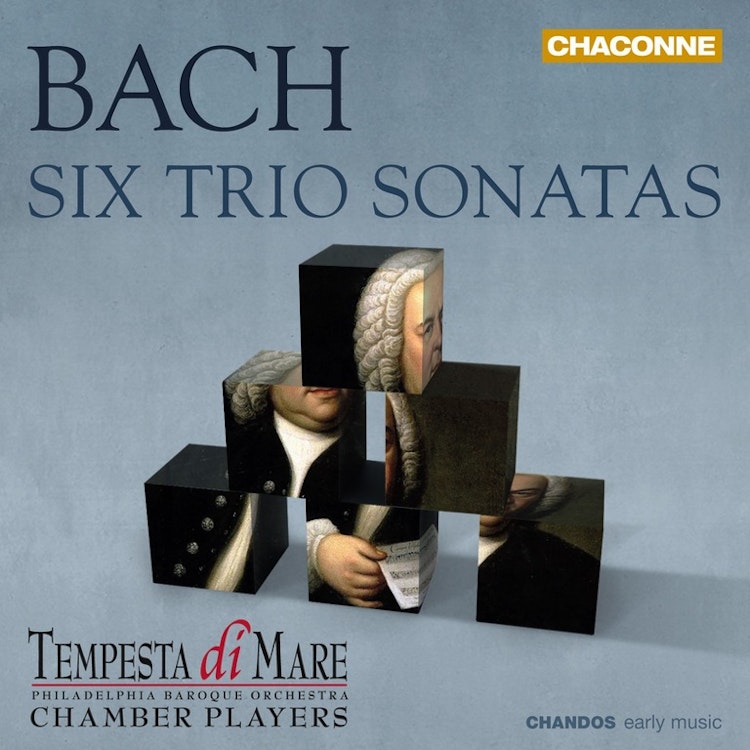
J.S. Bach: 6 Trio Sonatas (Arr. R. Stone for Chamber Ensemble)
6/3/2014, 18 Tracks, 1:13:05
Featuring
Tempesta di Mare
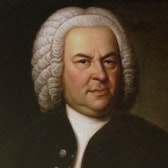
Johann Sebastian Bach
Did you know?
1/7
Compositional Technique
The style of these organ pieces is characteristic of the Italianate trio sonata, differing from Bach's other organ music in three parts, and is more concise and clearer in form than his instrumental sonatas.
Composition History
Johann Sebastian Bach (1685-1750) compiled these six trio sonatas for organ in the late 1720s, primarily as training material for his eldest son, Wilhelm Friedemann Bach (1710-1784).
Critical Reception
Johann Nikolaus Forkel (1749-1818), Bach's first biographer, noted that the organ trios were written in such a galant style that they would "outlive all revolutions of fashion in music."
Composer's Artistic Vision
Bach and his contemporaries viewed musical works as "relatively fluid entities," capable of assuming many forms depending on their purpose.
Interpretation
The Tempesta di Mare Chamber Players perform baroque music on baroque instruments and play all orchestral repertoire without a conductor, reflecting historical practice.
Composition History
Bach was compiling, rather than newly composing, these trios during the late 1720s, as evidenced by surviving early versions of some sonatas and movements.
Recording & Production
This Chandos recording uses 24-bit / 88.2 kHz technology, which provides a dynamic range up to 48 dB greater and 256 times the resolution of standard 16-bit recordings.
You might also enjoy...
Valentini: Sonate à flauto e basso
Handel & Vivaldi: Concerti e arie
Platti: Concerti grossi after Corelli
Platti: Concerti grossi after Corelli
Anthology of the Recorder, Vol. 5
Gentleman for a Day
Handel: Music for the Royal Fireworks (Original Version 1749)