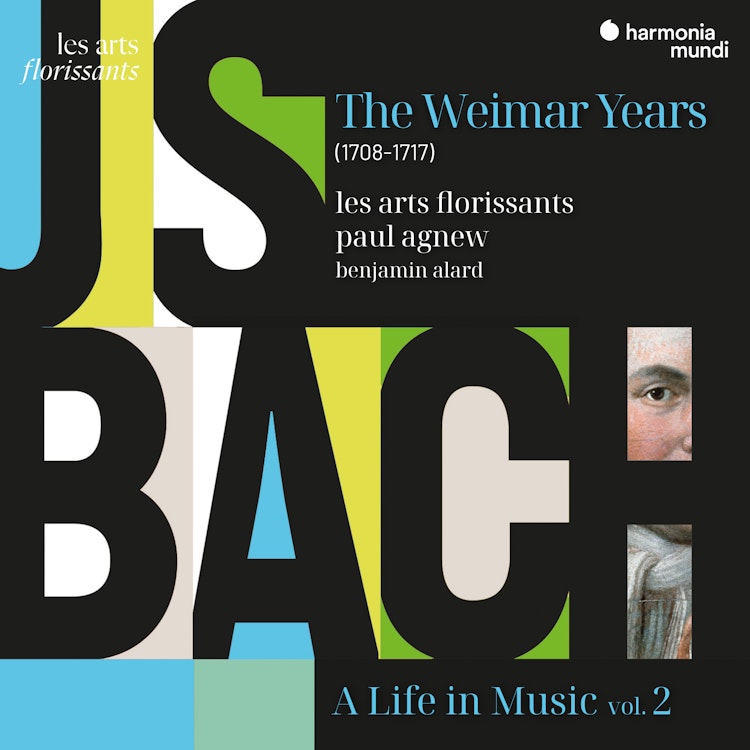
J. S. Bach: A Life in Music (Vol. 2). The Weimar Years (1708-1717)
3/14/2025, 27 Tracks, 1:17:47
Featuring
Maarten Engeltjes
Thomas Hobbs
Edward Grint
Paul Agnew
Miriam Allan
Benjamin Alard
Les Arts Florissants
Johann Sebastian Bach
Georg Philipp Telemann
Johann Michael Bach
Did you know?
1/7
Composer Biography
Johann Sebastian Bach, the composer, had 20 children, but 10 of them died in infancy, reflecting the high infant mortality rate of his era.
Composition History
Bach was instructed to compose one cantata each month from 1714 to assist the ailing Kapellmeister Johann Samuel Drese at the Weimar court.
Compositional Technique
In Weimar, Bach encountered the music of Antonio Vivaldi, whose concertos he transcribed for organ, which permanently transformed his compositional approach by showing him how to conceive temporality in a more abstract way.
Historical Context
Georg Philipp Telemann, a contemporary composer, was godfather to Bach's son Carl Philipp Emanuel Bach and served as Konzertmeister and Kapellmeister in Bach's hometown of Eisenach.
Compositional Technique
Bach reused the lament movement 'Weinen, Klagen, Sorgen, Zagen' from Cantata 12, which features a repeating chromatic tetrachord descent, as the 'Crucifixus' in his B Minor Mass decades later.
Composition History
Bach was imprisoned for a month and then dishonorably discharged from his post in Weimar for accepting a new position in Köthen without proper diplomatic procedure.
Interpretation
For this recording, the conductor Paul Agnew chose to double the singers for the choruses, following a suggestion by Bach himself for Cantata BWV 71.
You might also enjoy...
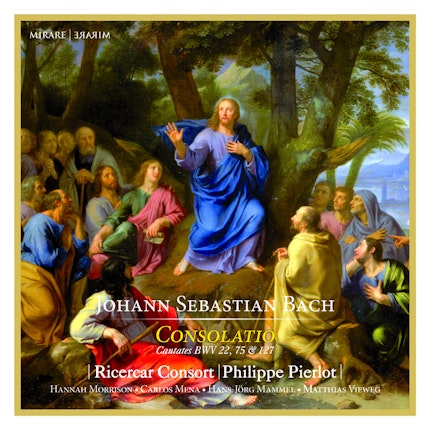
J.S. Bach: Consolatio
Bach Cantatas
Bach: Cantatas 27 - 47 - 138 - 96
L'Apocalypse
Trinitatis: Bach Cantatas
Fürchte dich nicht!
J. S. Bach: Gottes Zeit ist die allerbeste Zeit, BWV 106 Actus tragicus
Der Herr denket an uns, BWV 196
J. S. Bach: Bringet dem Herrn Ehre seines Namens, BWV 148