German Record Critic's Award - Quarterly Choice 3/2020.
Featuring
Benjamin Alard
Johann Sebastian Bach
Johann Caspar Ferdinand Fischer
François Couperin
Nicolas de Grigny
André Raison
Did you know?
1/7
Composer Biography
Bach's appointment in Weimar in 1708 was more substantial than his previous municipal organist positions, and his musical authority was better recognized.
Composition History
Bach's monumental Passacaglia in C minor BWV 582, composed around 1710, incorporates an ostinato theme from André Raison's 'Messe du deuxième ton' but also shows admiration for Dietrich Buxtehude's works.
Instruments
The second disc of this album was recorded on a historical Andreas Silbermann organ from 1710, located in the Abbey of Saint-Étienne in Marmoutier, Alsace.
Historical Context
The Duke of Saxe-Weimar, like other noblemen, traveled throughout Europe and brought back many works, especially French music, which influenced Bach.
Composer's Artistic Vision
Bach's Pièce d'Orgue in G major BWV 572 is an impressive blend of different national styles, reflecting the early 18th-century composers' aim to perfect music through such fusions.
Historical Context
The Silbermann brothers, Andreas and Gottfried, organ builders from Saxony, traveled to Paris to learn the French style of organ building at the end of the 17th century.
Compositional Technique
Bach's harpsichord suites typically feature a long, structured, fugal prelude, followed by established dances like allemande, courante, sarabande, and gigue, with other dances or 'doubles' sometimes interpolated.
You might also enjoy...
Bach: Toccatas
Johann Sebastian Bach: The Complete Works for Keyboard, Vol. 9 "Köthen, 1717-1723 - The Happy Years"
Gustav Leonhardt - The Edition
The realms of keyboard music vol.1
Anthology
J.S. Bach: Works for Harpsichord
La Danza
J.S. Bach: Famous Works on Pedal Harpsichord
Mozart: On Stein vis-à-vis
Bach, JS: Keyboard Works
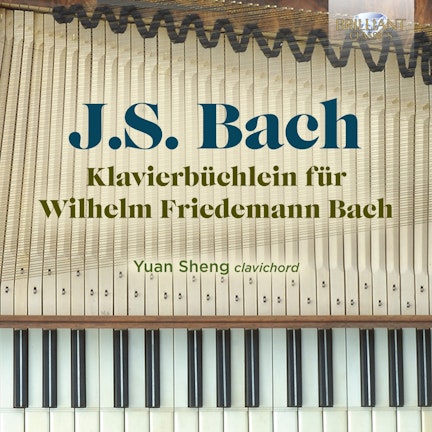
J.S. Bach: Klavierbüchlein für Wilhelm Friedemann Bach