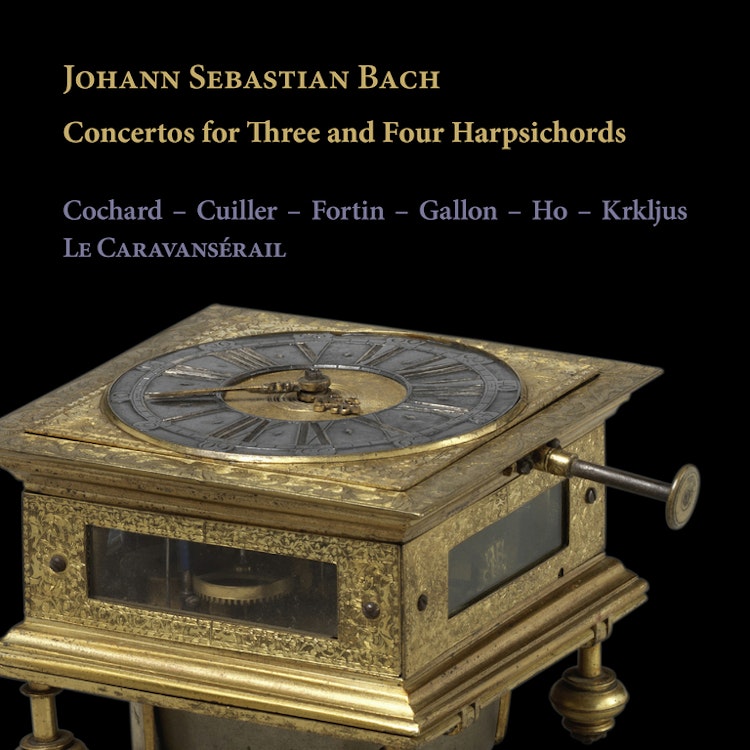
J. S. Bach: Concertos for Three and Four Harpsichords
5/23/2025, 12 Tracks, 49:49
Featuring
Violaine Cochard
Pierre Gallon
Jean-Luc Ho
Louis Creac‘h
Yoko Kawakubo
Jérôme van Waerbeke
Bruno Cocset
Richard Myron
Bertrand Cuiller
Davor Krkljus
Olivier Fortin
Le Caravansérail
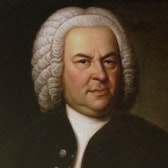
Johann Sebastian Bach
Did you know?
1/7
Composer Biography
Bach learned to "think musically" by studying the works of Vivaldi, whose scores were brought to him by his student Prince Johann Ernst of Saxe-Weimar.
Cultural Impact
Bach's harpsichord concertos significantly contributed to establishing the keyboard concerto as the most popular concerto form by the end of the 18th century.
Notable Performances
Felix Mendelssohn Bartholdy included Bach's Concerto in D minor (BWV 1063) in his repertoire from 1835, performing it with Clara Schumann and Louis Rakemann, making it one of Bach's most famous 19th-century compositions.
Historical Context
The title "Brandenburg Concertos" for Bach's Six Concerts avec plusieurs Instruments was coined in 1873 by Philipp Spitta in his Bach biography, referring to the dedicatee, Margrave Christian Ludwig of Brandenburg.
Composition History
Bach's concertos for three harpsichords (BWV 1063 and BWV 1064) were probably written for the keyboard training of his sons, Wilhelm Friedemann and Carl Philipp Emanuel Bach.
Composition History
The Concerto in A minor for four harpsichords (BWV 1065) is an adaptation of Antonio Vivaldi's Concerto for four violins from his L'Estro Armonico.
Composition History
Bach likely composed his concertos for multiple harpsichords in the 1730s, possibly motivated by Handel's organ concertos.
You might also enjoy...
J.S. Bach: Early Works
Clavichord Recital
Varietas
Bach 333: Harpsichord Works
Purcell & Friends: Harpischord Recital
Bach, J.S.: Harpsichord Music by the Young J.S. Bach
Handel: Works for keyboard
Bach: Clavier Übung II
Cembalo Cantabile - Works by Bach, Rameau & Scarlatti
J.S. Bach: Goldberg Variations, Partita No. 2 & Three-Part Inventions
Leonhardt Edition Vol.13 - J. Bull / J.J. Froberger