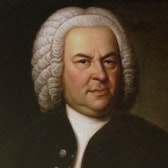
J.S. Bach, though known as a conservative, aimed to demonstrate that his chosen tuning system, Werkmeister III, allowed for compositions in any musical key.
Composition History
Bach's 'The Well-Tempered Clavier' is a purely didactic work, conceived over many years and incorporating existing compositions, many from the 'Klavierbüchlein vor Wilhelm Friedmann Bach'.
Compositional Technique
The 'Well-Tempered Clavier' was created partly due to the desire for a more modern harmonic structure that allowed for a greater number of tonalities to be played.
Interpretation
Daniele Boccaccio, the organist on this recording, believes Bach may have intended 'The Well-Tempered Clavier' for organ performance, citing specific passages with long legato notes and pedal requirements.
Historical Context
Before the 18th century, the German word 'Klavier' referred to any keyboard instrument, including organ, harpsichord, and clavichord, not exclusively the modern piano.
Instruments
This recording uses a Francesco Zanin Organ from 2006, which features 25 stops, 1626 pipes, and is tuned to Werckmeister III temperament.
Performer Biography
Daniele Boccaccio, the organist, was the youngest winner of the Noale's National Organ Competition in 1985 and is the first and only Italian musician to hold both Organ and Harpsichord soloist diplomas from Vienna's 'Universität für Musik und Kunst darstellende'.
You might also enjoy...
Bach - Clavier-Übung III
Le Chemin de la Croix op. 29
Zipoli: Sonate d'intavolatura per organo
The Complete Organ Works of Francisco Correa de Arauxo: Correa in the New World
Van Noordt: Works for Organ, Vol. 1
J.S. Bach: Die Kunst der Fugue, BWV 1080
Bach: Die Kunst der Fuge
Bach: Orgelbüchlein, BWV 599-644 (Complete Organ Works 7)
Bach: The Organ Works, The Master of the Organ (3/3)