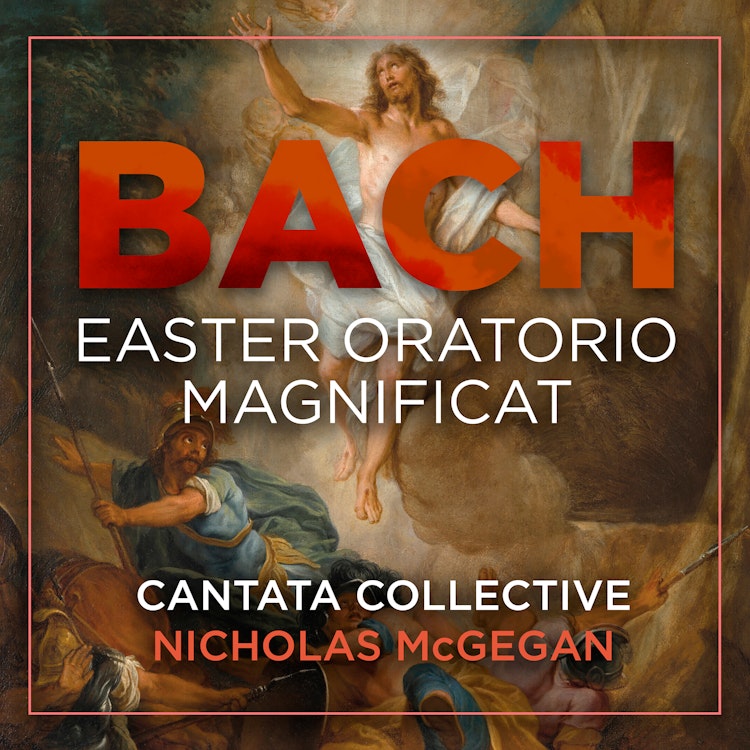
The Magnificat was a significant work from Bach's first year in Leipzig, notable for being in Latin, unlike most of his other compositions from that period which were in German.
Composer Biography
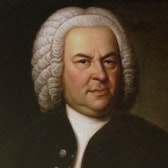
Despite lacking a university degree, Bach was proficient in Latin and even conducted his job interview for the Leipzig post entirely in Latin.
Historical Context
Bach revised the Magnificat in 1733, transposing it to D major and replacing recorders with transverse flutes, for a performance on July 2nd, which was the first time music could be reintroduced after a five-month period of mourning for Augustus II the Strong.
Composer Biography
Christian Friedrich Henrici, who wrote under the pen name Picander, was the poet for both the Easter Cantata and the Magnificat, and also collaborated with Bach on the St. Matthew Passion.
Composition History
Bach often reused his existing music; the Easter Oratorio is largely based on a cantata he wrote for the 43rd birthday of Christian, Duke of Saxe-Weissenfels.
Performer Biography
Nicholas McGegan, the conductor, is in his sixth decade on the podium and served as Music Director of Philharmonia Baroque Orchestra and Chorale for 34 years.
Compositional Technique
The manuscript of Bach's 1733 Magnificat is remarkably neat, showing how he efficiently used every inch of handmade paper, even squeezing in sections like 'Quia fecit' and 'Fecit potentiam' into available spaces.
You might also enjoy...
J.S. Bach: Magnificat, BWV 243
J. S. Bach: Lutheran Masses, Vol. 1
Vision Bach, Vol 6 - The First Cantata Year - Cantatas from the first Christmas day to Epiphany
Telemann: Luther Cantatas
Arias for Soprano and Oboe from Cantatas by J.S. Bach