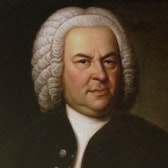
The Toccata and Fugue in D minor BWV565, though often identified with the organ, has simpler counterpoint and harmony that directly recall string instruments, making it suitable for guitar transcription.
Historical Context
The modern guitar did not exist in Bach's time, and the Baroque guitar was not widespread in Germany, though Bach did own a Baroque lute.
Performer Biography
Luigi Attademo, the guitarist on this album, has won prizes in international competitions and discovered unknown works by composers like Jaume Pahissa and Alexandre Tansman while cataloguing manuscripts.
Cultural Impact
Bach's Chaconne for violin BWV1004 has been widely transcribed for other instruments since the 1800s, including piano, orchestra, and guitar, becoming a cornerstone of the guitar repertoire.
Compositional Technique
Bach frequently transcribed his own music for different instruments, such as a cello suite becoming a lute suite, or a violin sonata becoming a harpsichord sonata.
Critical Reception
The attribution of the famous Toccata and Fugue in D minor BWV565 to Bach has been questioned by some scholars due to a lack of typical Bach stylistic features.
Composer's Artistic Vision
Cellist Mstislav Rostropovich described Bach's music as so ingenious and simple that it seems superhuman, like seeing the sky or a tree.
You might also enjoy...
J.S. Bach: Guitar Music
Florian Larousse plays Bach
Spanish Guitar Collection
Froberger, Buxtehude & Others: Variations for Guitar