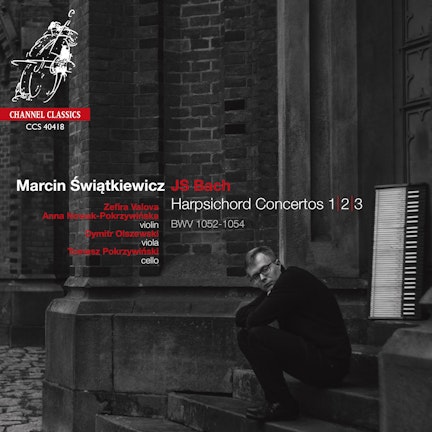
The autograph score for Bach's harpsichord concertos was likely written in 1738 or 1739, possibly for a visit to Dresden where Bach performed in aristocratic circles.
Recording & Production
The musicians on this recording perform the A major and G minor concertos with an additional continuo harpsichord, inspired by Bach's own fully figured continuo part found in the original parts for the A major concerto.
Historical Context
A relatively small portion of Bach's orchestral works survived, partly due to a significant change in musical taste that began in the mid-18th century.
Composer's Artistic Vision
The harpsichord concertos were not new compositions but mostly arrangements of earlier works, with three based on existing violin concertos.
Interpretation
Andreas Staier, the harpsichordist on this recording, adds embellishments and cadenzas in the style described by C. P. E. Bach, particularly in the reprises of large-scale da capo forms and in the third movements of some concertos.
Composition History
Bach's cycle of seven harpsichord concertos is preserved in an autograph score, which is one of the most important sources for his instrumental ensemble music due to the loss of most other original manuscripts.
Cultural Impact
It was only in the second half of the 20th century that musicologists recognized the pioneering significance of Bach's harpsichord concertos as marking the true beginnings of the keyboard concerto genre.