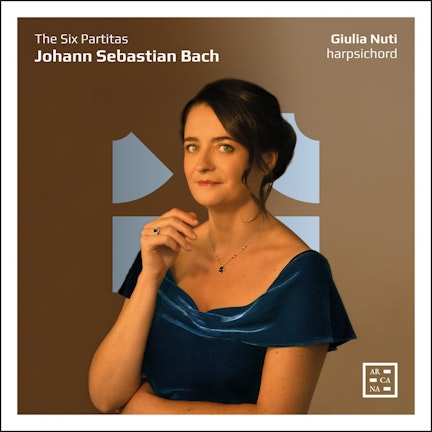
J.S. Bach: Harpsichord Partitas Nos. 3 & 5 & English Suite No. 3
6/24/2022, 21 Tracks, 1:05:33
Featuring
Ignacio Prego
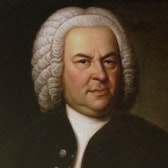
Johann Sebastian Bach
Did you know?
1/7
Composer Biography
During his lifetime, Johann Sebastian Bach was primarily known as a player of keyboard instruments, composing keyboard music throughout his career.
Compositional Technique
The traditional dance suite movements (allemande, courante, sarabande, gigue) each had a distinctive tempo, meter, and expressive character, established in France but later incorporating Italian styles by German composers.
Composition History
The six suites Bach called Partitas were initially printed individually, with the two recorded here appearing in 1727 and 1730, respectively.
Composition History
The six suites known as the English Suites were probably composed by Bach in Weimar and their nickname might reflect inspiration from Dieupart's or Mattheson's collections, which had English connections.
Historical Context
Dance and dance music were significant cultural elements in 17th and 18th century Europe, with educated Europeans learning to recognize and perform dances from the French royal court.
Composition History
Bach made a manuscript copy of Charles Dieupart's suites around 1715 while working at the ducal court of Weimar, where he also gathered his own harpsichord suites.
Compositional Technique
Bach's prelude to the English Suite No. 3 demonstrates how to create a crescendo on the harpsichord, an instrument typically lacking dynamic variation, by expanding from a single melodic line to a massive, quasi-orchestral sound.