Bach began composing these pedagogical pieces, including early forms of the Inventions and Sinfonias, around 1720, towards the end of his time in Köthen.
Composer's Artistic Vision
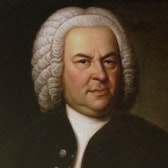
Johann Sebastian Bach, the composer, explicitly stated the purpose of these Inventions and Sinfonias was to teach harpsichord lovers to play pure two- and three-part music, acquire good 'inventions' (ideas), achieve a 'cantabile' (singing) style, and gain a strong foretaste of composition.
Composer Biography
In his own time, Bach was known primarily as an organist and teacher, not as a composer, and teaching provided him with significant additional financial income.
Interpretation
Wolfgang Rübsam, the performer, chose a calm tempo for this recording to allow all musical details to be appreciated and to emphasize the 'cantabile' (singing) style of playing that Bach himself demanded.
Compositional Technique
Unlike the Well-Tempered Clavier, Bach limited the Inventions and Sinfonias to 15 keys, following Johann Mattheson's 1713 list of the 16 most common keys, with the exception of F sharp minor.
Performer Biography
Wolfgang Rübsam, the performer, won the 1973 Grand Prix de Chartres in Interpretation and has held positions as professor of Church Music and Organ at Northwestern University and University Organist of the University of Chicago.
Instruments
The lute-harpsichord used in this recording, built by Keith Hill, features gut strings and a brass 4' set of strings for sympathetic vibration, creating a 'halo' effect similar to a Viola d'amore.