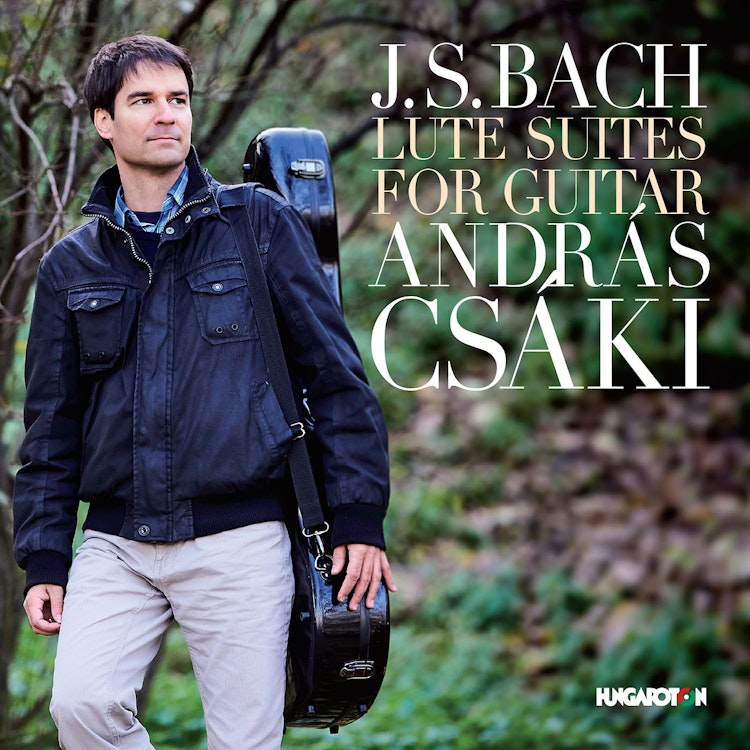
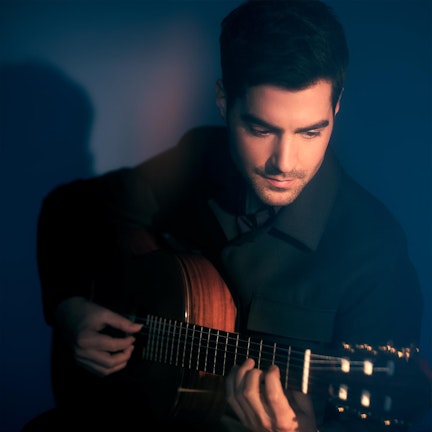
András Csáki, the guitarist on this album, has won several prestigious international competitions, including Tokyo (2008), Alessandria (2009), and Almeria (2011).
Recording & Production
For this recording, the guitar's tuning was changed between movements using various scordatura to achieve a richer, fuller sound or to emulate the authentic sound of the original lute or harpsichord.
Historical Context
Bach likely did not play the lute himself but maintained good relationships with famous lutenists of his time, such as Ernst Gottlieb Baron, Johann Kropffgans, Christian Weyrauch, Adam Falckenhagen, and Sylvius Weiss.
Compositional Technique
Many of Bach's lute works were not notated in lute tablature but in a two-system staff notation, complicating whether they were intended for lute or lute-harpsichord.
Interpretation
The suites, originally for lute or lute-harpsichord, cannot be played directly on a modern classical guitar due to significant differences in tuning and range, requiring performers to create their own versions.
Composition History
Bach composed and arranged works for the lute throughout his career, including solo pieces and parts for major orchestral works like the Trauerode and the St. John and St. Matthew Passions.
Composer Biography
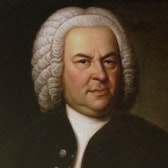
J. S. Bach owned a lute and two lute-harpsichords, indicating his strong interest in the instrument and its delicate sound.