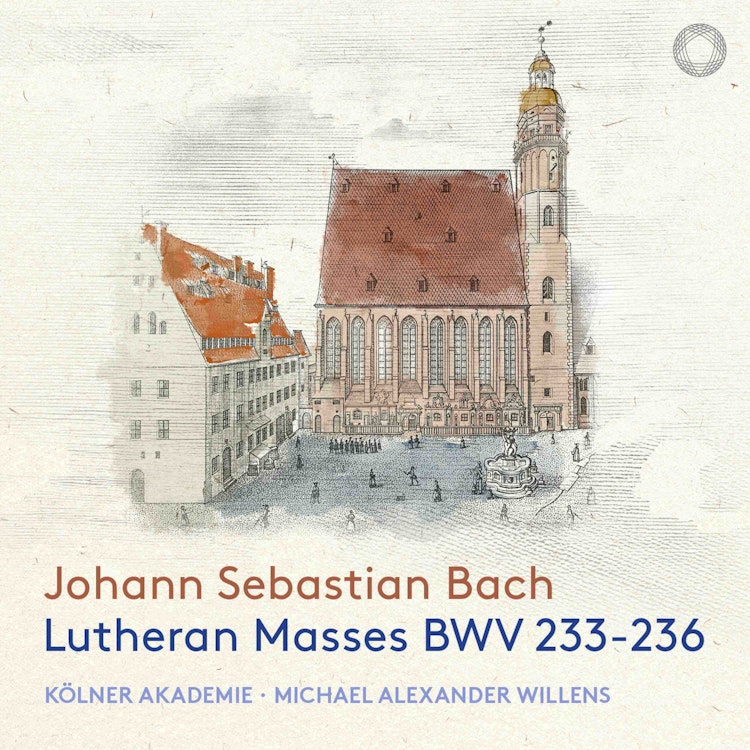
After Bach's death in 1750, his four Kyrie-Gloria Masses fell into obscurity or were dismissed as 'small' Masses based on cheap parody.
Composer Biography
Johann Sebastian Bach became Thomaskantor and Director of Music in Leipzig in May 1723, a role that included directing church music, accompanying festivals, funerals, and academic events, and teaching.
Interpretation
The conductor, Michael Alexander Willens, recreated the small forces likely used for the first performances of these Masses, aiming for an intimate sound.
Recording & Production
This album was recorded at Immanuelskirche Wuppertal in Wuppertal, Germany, between October 21-26, 2025.
Composer's Artistic Vision
Bach used the 'timeless' Latin text of the Mass Ordinary for his Kyrie-Gloria Masses, likely believing that some of his earlier cantata texts might not appeal to contemporary tastes.
Composition History
Bach's four Kyrie-Gloria Masses (BWV 233-236) are not new compositions but rather 'parodies' or revisions of earlier cantata movements, created in 1738.
Historical Context
In Lutheran Leipzig, where Bach worked, Mass texts were typically sung as German hymns, and Latin Mass movements with large orchestras were only performed on high church festivals.
You might also enjoy...
Bach: Mass in B Minor, BWV 232
Bach: Mass in B minor
Bach: Mass in B minor
Handel: Chandos Anthems - I Will Magnify Thee; In the Lord Put I My Trust