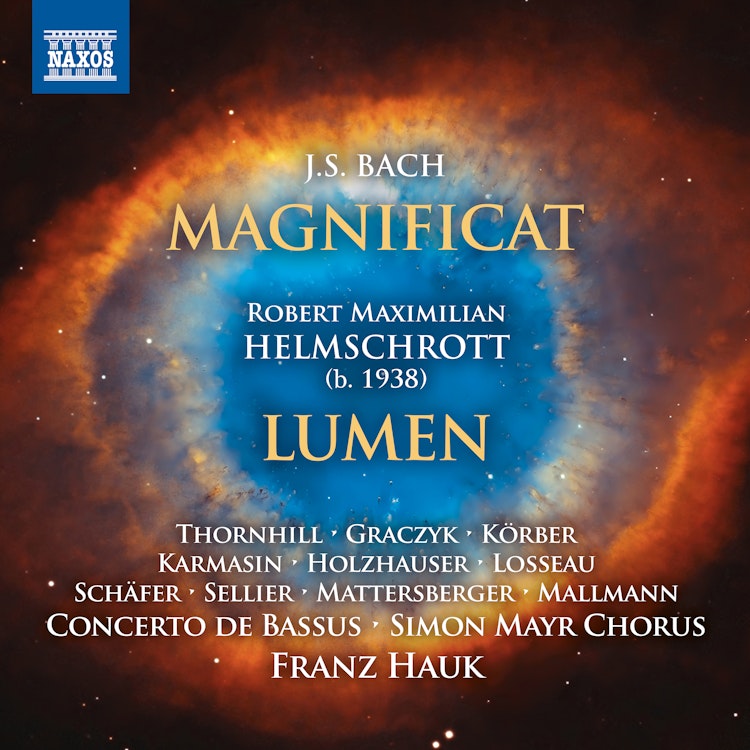
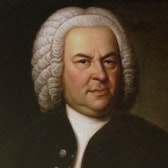
Bach's Magnificat sets the Biblical text not in the da capo aria form common in cantatas of the period, but as ten continuous, musically interconnected verses.
Historical Context
Johann Wolfgang von Goethe, the German poet, considered the Qur'an a holy book alongside the Bible, believing that different ways of thinking should coexist peacefully.
Composer's Artistic Vision
Lumen, by Robert Maximilian Helmschrott, reminds listeners of the commonalities among the three Abrahamic religions and advocates for overcoming fundamentalist doctrines.
Composer's Artistic Vision
Robert Maximilian Helmschrott's Lumen is an interfaith dialogue that aims to translate the poetry of the Old and New Testaments, Torah, and Qur'an into a 'language of sounds and singing'.
Performer Biography
Theona Gubba-Chkheidze, the concertmaster of Concerto de Bassus, is a co-founder of the ensemble and has made over 20 recordings for Naxos.
Recording & Production
This album was recorded in September 2017 at the Kongregationssaal in Neuburg, Germany.
Composition History
J.S. Bach composed the first version of his Magnificat in E-flat major for Christmas of 1723, and later revised it between 1732 and 1735, transposing it to D major.
You might also enjoy...
Anthology of Russian Sacred Music
Exclusive
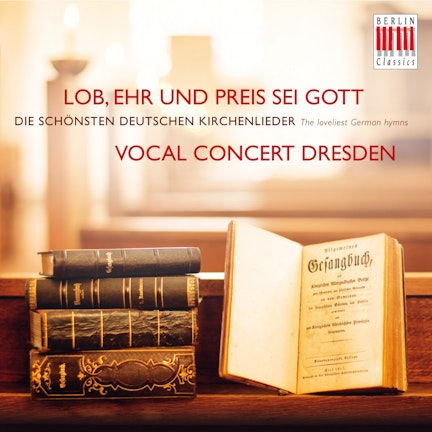
Lob, Ehr und Preis sei Gott
Millennium: Choral Music of Today (Live)
Tabart: Requiem/Te Deum/Magnificat
Whitbourn: Carolae – Music for Christmas
Vaughan Williams: Hymns
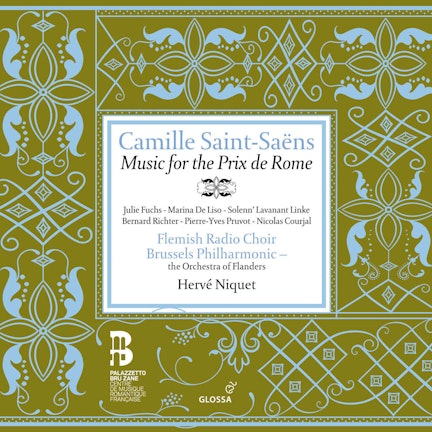
Saint-Saens: Music for the Prix de Rome
O Sacrum Convivium: Music for the Mass
Choral Music - Tavener, J. / Ligeti, G. / Debussy, C. / Badings, H. / Poulenc, F. / Rutti, C. / Thompson, R.