Gramophone Classical Music Awards 2025: Recording of the Year & Choral
BBC Music Magazine Awards Nominations 2026
Featuring
Julie Roset
Beth Taylor
Lucile Richardot
Emiliano Gonzalez Toro
Christian Immler
Raphaël Pichon
Pygmalion
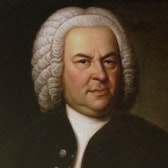
Johann Sebastian Bach
Did you know?
1/7
Composition History
Bach initially presented a Kyrie and Gloria from the Mass in B minor in 1733 to Friedrich August II, the Elector of Saxony and King of Poland, to support his application for the title of 'court composer'.
Critical Reception
For a long time, the Mass in B minor's significance was not recognized; Friedrich Smend, its 1954 editor, considered it an arbitrary compilation and its full performance an 'artistic blunder'.
Composition History
The Mass in B minor was not conceived as a single work, but developed over 30 years, with its genesis beginning at Christmas 1724.
Composer Biography
Bach used the period of national mourning after the death of August I, 'the Strong', in 1733, which banned music in churches, to compose the Kyrie and Gloria of the Mass in B minor.
Critical Reception
The Mass in B minor was praised by Zurich music scholar Hans-Georg Nägeli in 1818 as the 'greatest musical work of art of all times and peoples' upon the publication of its first volume.
Composer's Artistic Vision
Bach's Mass in B minor is considered his artistic legacy, comparable to the 'Missae ultimae' of Jan Dismas Zelenka, a Dresden court musician.
Critical Reception
Carl Philipp Emanuel Bach, the composer's son, recognized the Mass in B minor as his father's 'opus summum' and performed its monumental Credo in Hamburg in 1786.
You might also enjoy...
Bach: Mass in B Minor, BWV 232
Bach: Mass in B minor
Bach: Mass in B minor
Handel: Chandos Anthems - I Will Magnify Thee; In the Lord Put I My Trust