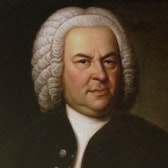
The Second Silesian War and the Prussian occupation of Leipzig in 1745, which Bach experienced firsthand, may have triggered his decision to complete the Mass.
Compositional Technique
The 'Et incarnatus est' movement of the Credo is noted as the newest and most progressive music in the Mass, and possibly the last musical movement Bach ever completed.
Composition History
Bach completed his Mass in B minor in the last two years of his life, but its origins date back some forty years earlier to his time at the ducal court of Weimar.
Historical Context
The Mass in B minor was an unusual form for an 18th-century Lutheran composer like Bach to tackle, as it used the immutable Latin text of the Catholic Mass.
Composer's Artistic Vision
Bach's Mass in B minor aimed to be an encyclopaedic survey of all the musical styles he cherished, from his own time and earlier periods, demonstrating his 'habit of perfection'.
Composition History
In 1733, Bach presented an earlier version of the Kyrie and Gloria movements, known as the Dresden Missa, to the new Elector of Saxony, Friedrich August II, while seeking a court title.
Composition History
Bach's Mass in B minor was not conceived as a single work; it was assembled piecemeal over many years, incorporating earlier compositions.
You might also enjoy...
Bach: Mass in B Minor, BWV 232
Bach: Mass in B minor
Bach: Mass in B minor
Handel: Chandos Anthems - I Will Magnify Thee; In the Lord Put I My Trust