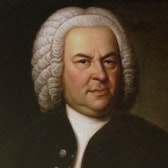
This recording of Bach's Orchestral Suites uses single players per part and a low, 'French' pitch to create a chamber-music feel and avoid balance issues with trumpets.
Composer's Artistic Vision
Bach's art of dance composition, as seen in these suites, significantly refined his musical language, particularly in articulation and expression, affecting all facets of his instrumental and vocal music.
Historical Context
The Collegium Musicum, a concert society in Leipzig, played an important role in public musical life and was often led by prominent musicians like Georg Philipp Telemann, who founded a new Collegium in 1701.
Composition History
While traditionally thought to be from Bach's time as Kapellmeister in Cöthen, more recent studies suggest most of his instrumental ensemble music, including these Orchestral Suites, was composed in Leipzig for the Collegium Musicum.
Performer Biography
Richard Egarr, the AAM's Music Director, is a versatile musician skilled on harpsichord, organ, fortepiano, and modern piano, and has been described as 'the Bernstein of Early Music' by USA National Public Radio.
Composer Biography
Johann Sebastian Bach served as music director for the Collegium Musicum in Leipzig from 1729 until the early 1740s, a major commitment in addition to his church music obligations.
Compositional Technique
The Orchestral Suites differ from Bach's keyboard suites by not adhering to a strict pattern of movements, though all begin with an Ouverture, a tradition from 17th-century French opera.
You might also enjoy...
Bach: Orchestral Suites for a Young Prince
The Queen’s Favourites
Handel: Water Music Suites; Music for the Royal Fireworks
Bach, J.S.: Overtures and Suites
Bach, JS : Orchestral Suites Nos 1 & 2
Rameau: Platée And Dardanus Suites
Handel: Water Music Suites & Music for the Royal Fireworks