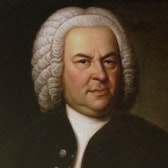
J.S. Bach: Solo Cantatas for Alto - Armenian Chants
6/5/2025, 18 Tracks, 1:12:09
Featuring
Seda Amir-Karayan
Fritz Krämer
Camerata Vivaldiana
Mesrop Mashtots
Johann Sebastian Bach
Grigor Narekatsi
Nerses Shnorhali
Did you know?
1/7
Composition History
The period starting on the first Sunday after Trinity in 1726 marked a new and highly fruitful creative phase for Bach, during which he resumed composing after a six-month hiatus.
Composer's Artistic Vision
Johann Sebastian Bach consistently engaged with contemporary musical developments but avoided short-lived fashions, particularly in his choice of texts for sacred works.
Interpretation
For this recording, the musicians chose to perform in Kammerton (415 Hz) to allow the soloist to utilize the lower register of her voice, despite historical uncertainties regarding pitch.
Compositional Technique
During this 1726 creative phase, Bach's cantatas shifted from opulent choral works to those featuring solo voices, finely crafted arias, and a more prominent, concertante role for the organ.
Historical Context
Armenian church music, one of the oldest branches of Eastern Christian culture, consisted of monophonic unaccompanied song for 1500 years.
Historical Context
The development of Armenian sacred music entered a new stage after Christianity became the state religion in 301 and St Mesrop Mashtots developed the Armenian alphabet in 405/6.
Composer Biography
Bach favored linguistically sophisticated poetry for his sacred works, including texts by Georg Christian Lehms, a Darmstadt court librarian, whose Gott-gefällige Kirchen-Opffer (1711) he used extensively.