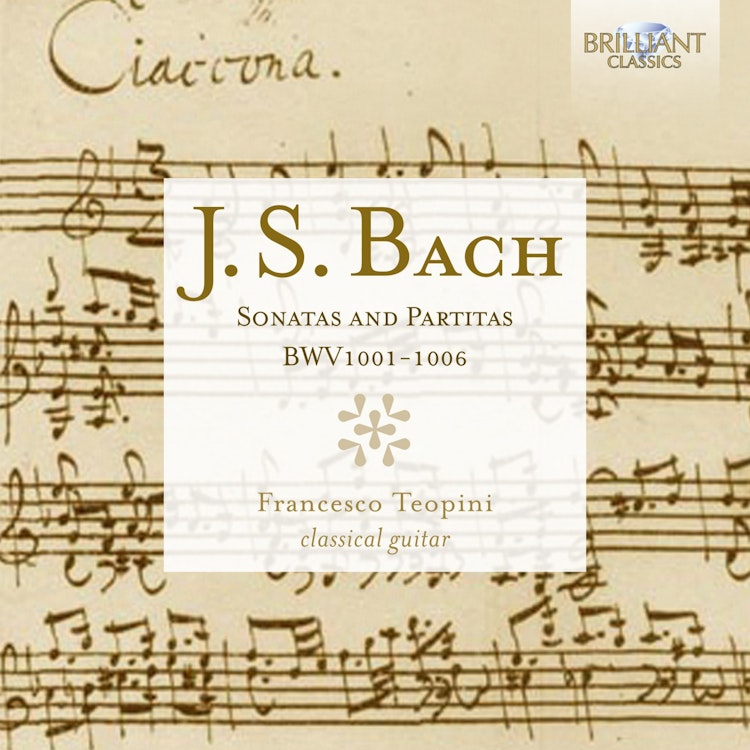
J.S. Bach: Sonatas and Partitas for Classical Guitar
11/4/2016, 27 Tracks, 2:34:58
Featuring
Francesco Teopini
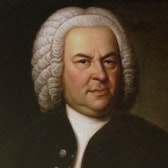
Johann Sebastian Bach
Did you know?
1/7
Composition History
These Sonatas and Partitas for solo violin were composed around the same time as Bach's Cello Suites and were originally titled 'Six Solos for Violin without Bass accompaniment'.
Cultural Impact
Guitarists like Francisco Tarrega and Andres Segovia helped popularize transcribing and performing Bach's music, including these works, in guitar recitals.
Compositional Technique
Bach's three Sonatas (BWV1001, 1003, 1005) are in the sonata da chiesa (church sonata) style, typically featuring a slow introduction, a fast fugue, a slower introspective movement, and a final agile movement.
Critical Reception
These works gained renewed appreciation in the 19th century through composers like Mendelssohn and Schumann, and performers such as Joseph Joachim, leading to a steadily growing number of admirers.
Compositional Technique
The three Partitas (BWV1002, 1004, 1006) are written as sonate da camera (chamber sonatas), which usually feature an introductory prelude or sonata followed by several dance movements.
Composer Biography
Johann Sebastian Bach composed these Sonatas and Partitas for solo violin during his time as Kapellmeister for Prince Leopold of Anhalt-Köthen, a period focused on instrumental music.
Historical Context
The genre of solo violin compositions, to which Bach's works belong, originated in 17th-century Germany with composers like Heinrich Ignaz Franz Biber and Johann Paul von Westhoff.
You might also enjoy...
Solo
Weinan: Love At Night Of Tulips
Trois ciels : compositions de Bernard Piris
Tatyana Ryzhkova, Top 10
Danse avec Scarlatti
Bach: Partitas - Marais: Les folies d’Espagne
Ravi - The Music of Dušan Bogdanović
Remembranzas de mI Guitarra
A Fantastic Journey
Brouwer: Estudios Sencillos, Preludios Epigramáticos