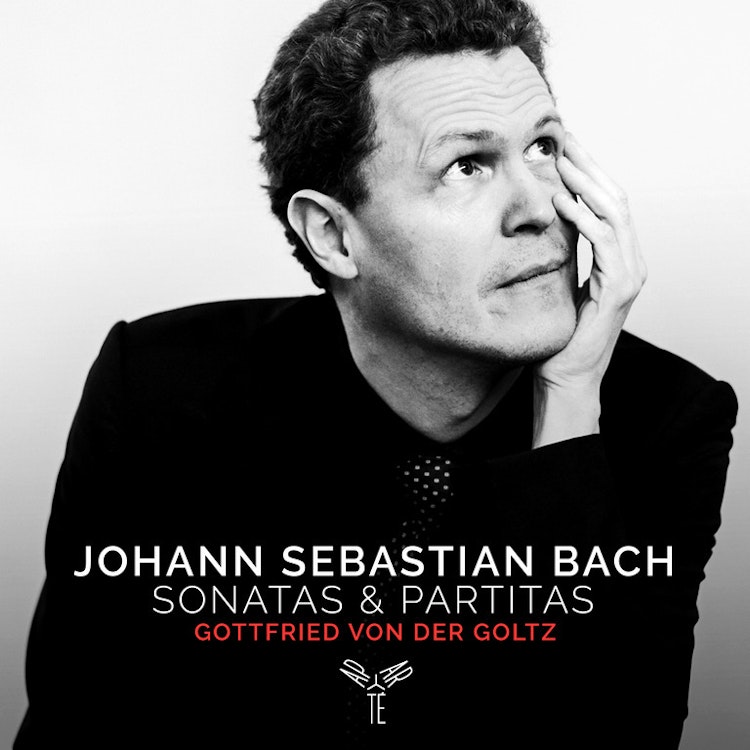
Bach's Sonatas and Partitas for solo violin use various musical elements like style, genre, key, tempo, and rhythm to express a wide range of human emotions, or 'affections.'
Instruments
Gottfried von der Goltz, the violinist on this recording, plays a Paolo Antonio Testore violin made in Milan around 1720.
Historical Context
The 17th and 18th-century musical concept of 'affection' or 'passion,' as described by theorist Johann Mattheson, referred to any human emotion that composers aimed to evoke in listeners.
Composition History
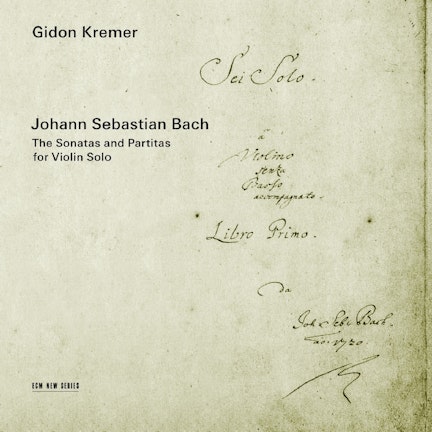
Among the four surviving 18th-century manuscript copies of Bach's Sonatas and Partitas for solo violin, one was made by his wife, Anna Magdalena.
Compositional Technique
The 'senza basso' (without bass) scoring in Bach's Sonatas and Partitas for solo violin allows for greater expressive freedom, reflecting the constant, subtle changes in human emotions.
Critical Reception
Early 19th-century editions of Bach's Sonatas and Partitas, like Simrock's 1802 edition titled 'Studio,' primarily regarded them as study material rather than concert pieces.
Composition History
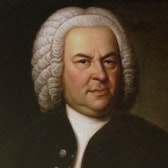
Bach's Sonatas and Partitas for solo violin, completed around 1720, are exceptional because few compositions from that era have multiple surviving copies.
You might also enjoy...
J.S. Bach: Violin Sonatas & Partitas
Bach: The Sonatas and Partitas for Violin Solo
Bach: Sonatas & Partitas for Solo Violin
Bach, J.S.: Violin Sonatas and Partitas (Complete)
Bach: Sonatas and Partitas for Solo Violin
Bach : Violin Sonatas & Partitas BWV1001-1006
J.S. Bach: Sonatas & Partitas
Bach: Sonatas & Partitas
Bach: Sonatas & Partitas
Bach: Violin Sonatas and Partitas, BWV 1001-1006
Sei Solo
Ning Feng - J.S. Bach: Partitas and Sonatas for solo violin
J.S. Bach: Sonatas & Partitas for Violin
Bach: The Six Sonatas and Partitas for Solo Violin