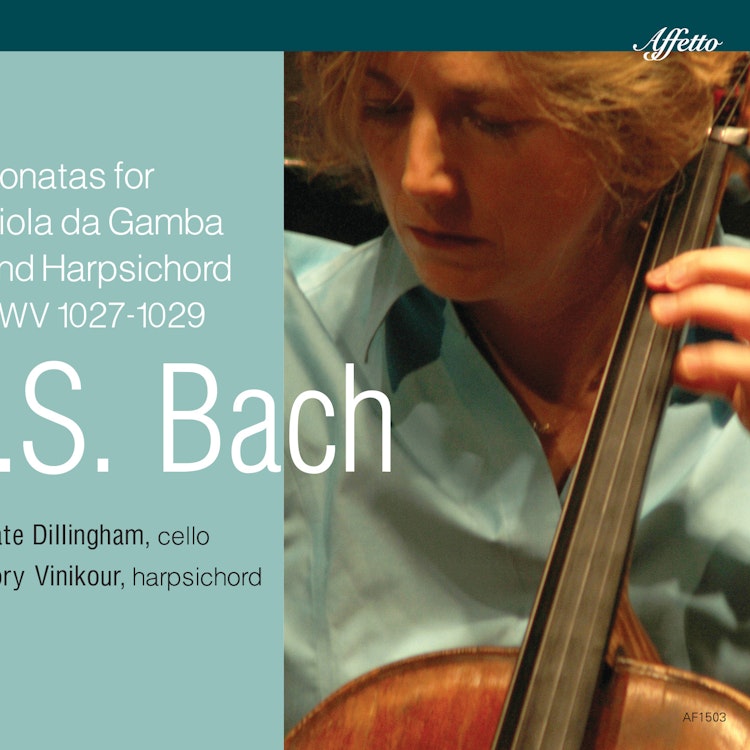
J.S. Bach: Sonatas for Viola da gamba & Harpsichord, BWV 1027-1029
3/25/2016, 11 Tracks, 45:16
Featuring
Kate Dillingham
Jory Vinikour
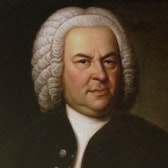
Johann Sebastian Bach
Did you know?
1/7
Interpretation
The sonatas on this recording are performed on a modern violoncello (cello) instead of the historical viola da gamba, a substitution with a long-established precedent.
Composition History
The exact circumstances of the Sonatas for Viola da Gamba and Harpsichord's creation are unknown, including when, for whom, and on what occasion Bach composed them.
Compositional Technique
Unlike many contemporary works, Bach's Gamba Sonatas demand equal virtuosity from both the viola da gamba and the harpsichord, rather than treating the harpsichord as mere accompaniment.
Recording & Production
This recording is based on an edition of the sonatas by Bernard Greenhouse and Kate Dillingham, published by G. Schirmer, Inc., and is issued during the 100th anniversary year of Greenhouse's birth.
Historical Context
Bach's Gamba Sonatas were written for an instrument, the viola da gamba, that was rapidly becoming obsolete, similar to Henry Purcell's music for viol consort and Joseph Haydn's works for baryton.
Album & Artwork
The album is dedicated to the memory of William H. Scheide, a Bach scholar, philanthropist, and humanitarian who founded the Bach Aria Group in 1946.
Performer Biography
Kate Dillingham, the cellist on this recording, was a student of Bernard Greenhouse, a renowned cellist who was part of the Bach Aria Group.
You might also enjoy...
Bach: Musical Offering
Bach: Die Kunst der Fuge
Bach, J.S.: Goldberg-Variationen (version for string trio by Dmitry Sitkovetsky)
Vitali: Varie Sonate alla Francese & all'Itagliana à sei Stromenti, Op. 11
A Musical Offering
J.S. Bach: The Art of Fugue, BWV 1080
Bach: The Art of Fugue, BWV 1080
J.S. Bach: Goldberg Variations, BWV 988 (Arr. for Chamber Ensemble)
Guido: The four seasons
J.S. Bach Sonatas for Viola (da Gamba) and Harpsichord BWV 1027-1029