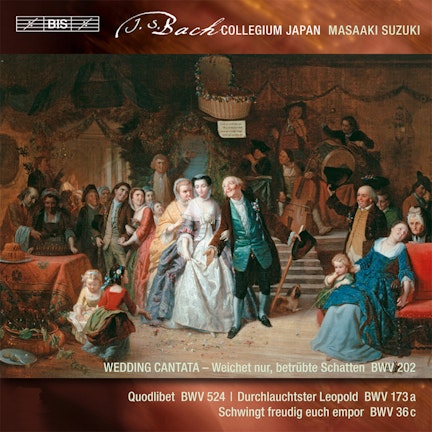
The Bach Collegium Japan, founded by Masaaki Suzuki, has gained international renown for its period instrument performances, completing a 55-volume recording project of Bach's church cantatas in 2013.
Historical Context
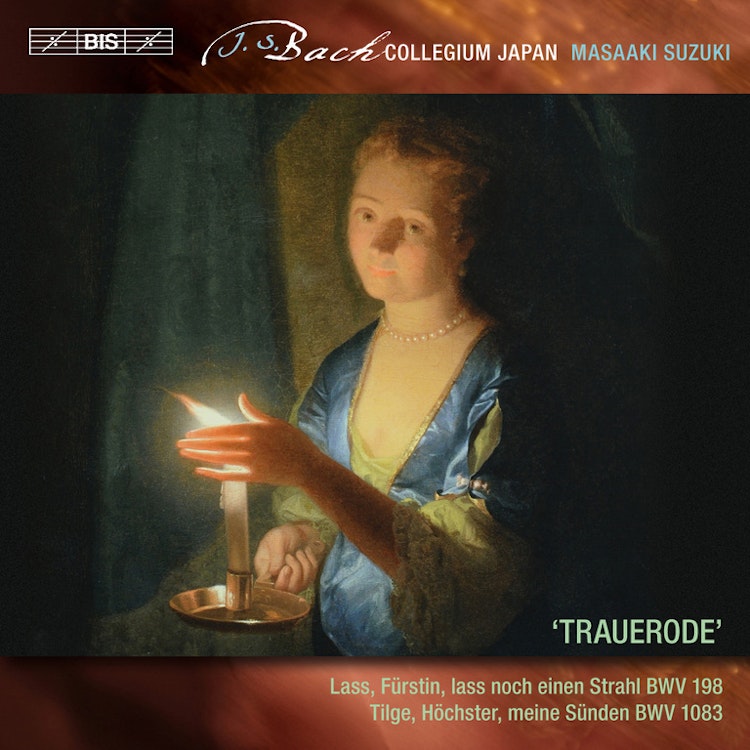
Christiane Eberhardine, the subject of Bach's 'Mourning Ode' (BWV 198), was adored by the Protestant population of Saxony for remaining Evangelical despite her husband's conversion to Catholicism.
Composition History
The alto aria 'Schlage doch, gewünschte Stunde' (BWV 53) was long attributed to Bach but was later found to be by Georg Melchior Hoffmann, music director of Leipzig's Neue Kirche.
Composer's Artistic Vision
Bach's arrangement of Pergolesi's 'Stabat mater' (BWV 1083) shows his engagement with new stylistic trends, yet he also integrated it into his own stylistic world, almost as a 'restoration'.
Compositional Technique
Bach's 'Tilge, Höchster, meine Sünden' (BWV 1083) is an arrangement of Giovanni Battista Pergolesi's 'Stabat mater', with a new German text based on Psalm 51.
Compositional Technique
In the alto recitative of BWV 198, Bach imitated the sound of bells by having instrumental groups enter sequentially from high flutes to the lowest continuo register.
Composition History
Bach's 'Mourning Ode' (BWV 198) was commissioned by a student, Hans Carl von Kirchbach, for a memorial event for Christiane Eberhardine, the Electress of Saxony, in 1727.