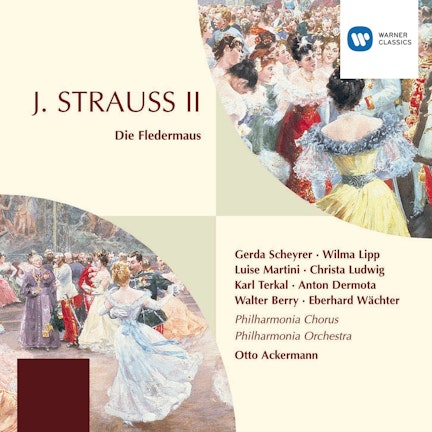
The original French play, Le réveillon, on which Die Fledermaus is based, was nearly banned in Austria because its Christmas Eve setting was considered too risqué by the Catholic hierarchy.
Composition History
The composer Johann Strauss II was particularly thrilled with the libretto for Die Fledermaus because it centered on a grand ball, which was his greatest desire.
Notable Performances
In Max Reinhardt's 1929 Berlin production of Die Fledermaus, the characters were portrayed as inebriated from the very beginning, a masterly insight into the work's bittersweet appeal.
Recording & Production
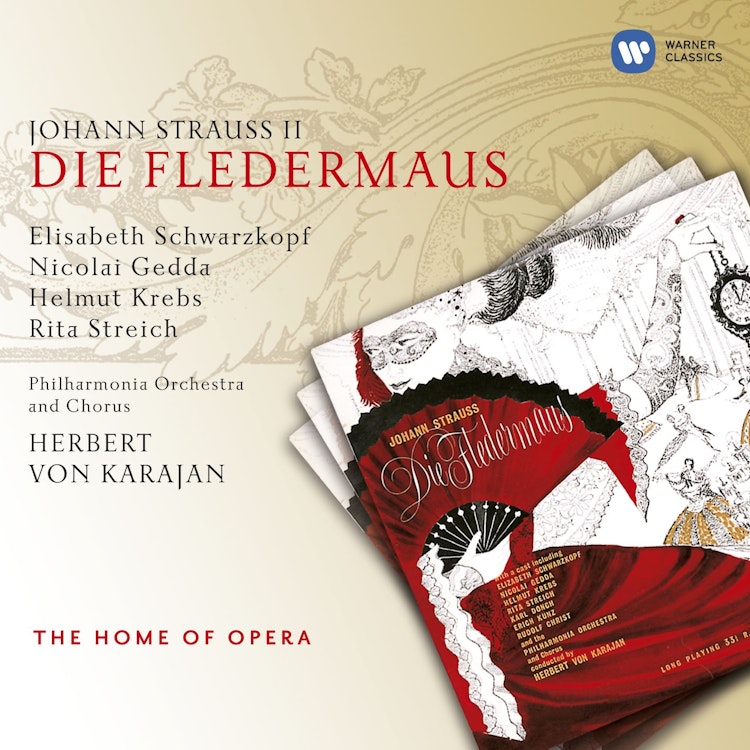
Producer Walter Legge and conductor Herbert von Karajan sought a performance of Die Fledermaus with "grit, dash, pep" and a subtle rubato, aiming for a sophisticated style rather than cosy charm.
Composition History
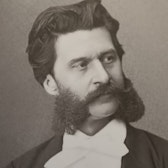
Johann Strauss II, known as "the waltz king," initially had no great desire to write for the theatre, believing words were best left unsauced.
Interpretation
In this recording, the role of Prince Orlofsky, originally for soprano, is sung by a tenor, following the precedent set by Max Reinhardt's Berlin production.
Critical Reception
Die Fledermaus premiered during a severe financial crisis in Vienna in 1874, which made the opera's themes of champagne and free-market capitalism unsettling for many audiences.