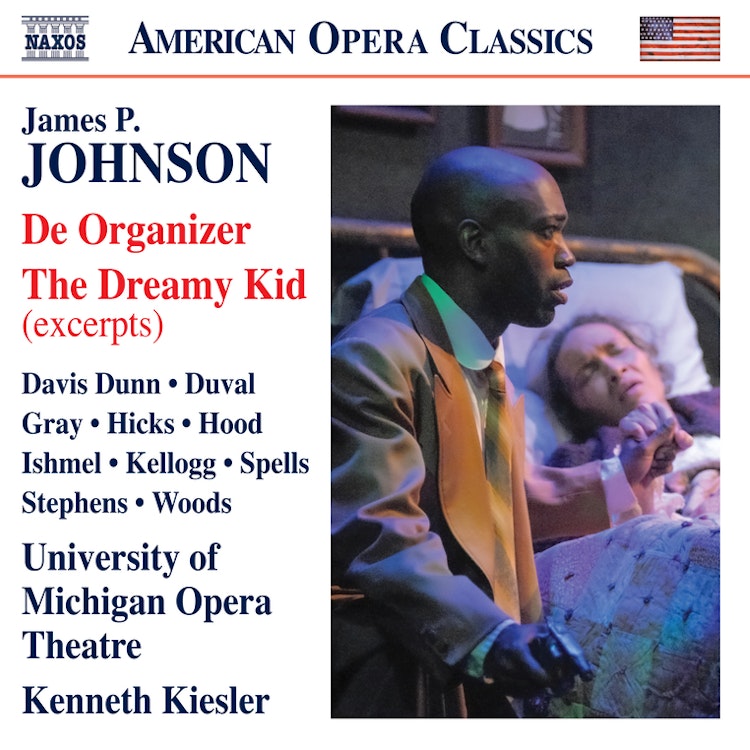
James P. Johnson: De Organizer & The Dreamy Kid (Excerpts)
9/8/2023, 7 Tracks, 1:05:59
Featuring
Kenneth Kiesler
Darnell Ishmel
Monique Spells
Kenneth Kellogg
Rabihah Davis Dunn
Olivia Duval
Emery Stephens
Lonel Woods
Branden C.S. Hood
Elizabeth Gray
Lori Celeste Hicks
University of Michigan Symphony Orchestra
De Organizer Chorus
James P. Johnson
Did you know?
1/7
Composer Biography
James P. Johnson, renowned as the "Father of the Stride" piano, influenced jazz innovators like Art Tatum, Fats Waller, Count Basie, and Duke Ellington.
Composition History
The Dreamy Kid, James P. Johnson's first opera, is an adaptation of a 1918 play by white playwright Eugene O'Neill, who later won a Nobel Prize in Literature.
Composition History
James P. Johnson's opera De Organizer, with a libretto by Harlem Renaissance poet Langston Hughes, was performed only once in 1941 before being considered lost.
Compositional Technique
James P. Johnson's operas defy neat stylistic categories, blending big band dance tunes, longing spirituals, and secco recitative alongside each other.
Recording & Production
The operas on this album were reconstructed by James Dapogny, a jazz musicologist, after he found a partial score of De Organizer in 1997 and later discovered music for The Dreamy Kid.
Cultural Impact
James P. Johnson's operas emerged from a 'shadow culture' of Black music-making that flourished despite African Americans being excluded from mainstream American classical music institutions.
Historical Context
The Dreamy Kid reflects the real threats of mob and police violence for African Americans in the early 20th century, particularly during the 'Red Summer' of 1919.