Otče náš featured tableaux vivants, a popular 19th-century theatrical genre where actors silently portrayed scenes to musical accompaniment, inspired by paintings by Polish artist Jósef Męcina-Krzesz.
Composer's Artistic Vision
Despite being a staunch nonbeliever, Janáček, a fervent Pan-Slavist, may have been attracted to the Polish provenance of the paintings that inspired Otče náš.
Composition History
The Glagolitic Mass was composed by Janáček during an exceptionally rainy summer holiday in Luhačovice in July 1926, after he had completed his eighth opera, The Makropulos Affair.
Composition History
Janáček's Adagio for Orchestra may have been written as an immediate reaction to the death of his two-year-old son, Vladimír, in 1890.
Composer Biography
Leoš Janáček became famous after the success of his opera Jenůfa in Prague in 1916.
Recording & Production
This recording uses the 'classic' 1928 version of the Glagolitic Mass, which Janáček approved for publication, rather than an earlier 1927 version.
Composition History
Janáček composed Otče náš (Our Father) in 1901 as a unique stage work to raise funds for the Brno Women's Shelter.
You might also enjoy...
Orff Carmina Burana
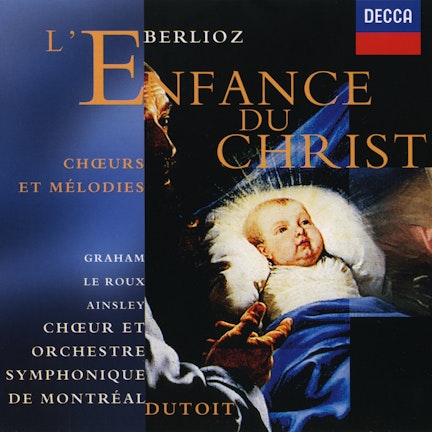
Berlioz: L'Enfance du Christ etc
Gabriel Fauré: Geistliche Werke (Musique religieuse)
Brahms: Gesang Der Parzen / Rhapsodie / Rinaldo
Sacred Songs
Motets romantiques
Schoenberg, A.: Kol Nidre / Bernstein, L.: Halil / Bloch, E.: Baal Shem / Zeisl, E.: Requiem Ebraico (Remembrance)