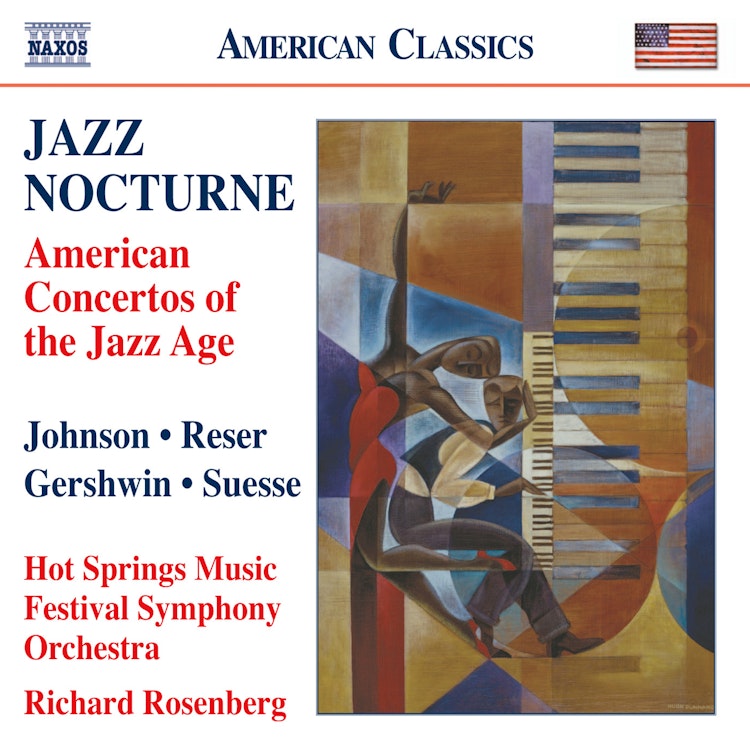
Jazz Nocturne - American Concertos of the Jazz Age
8/1/2011, 9 Tracks, 1:10:26
Featuring
Richard Rosenberg
Gary Hammond
Don Vappie
Tatiana Roitman Mann
Peter Mintun
Michael Gurt
Hot Springs Music Festival Symphony Orchestra
Creole Jazz Serenaders
James P. Johnson
Harry Reser
George Gershwin
Dana Suesse
Did you know?
1/7
Album & Artwork
The album title, "Jazz Nocturne: American Concertos of the Jazz Age," refers to the flamboyant era in America after World War I, a phrase coined by F. Scott Fitzgerald in his novel The Great Gatsby.
Performer Biography
Conductor Richard Rosenberg, the Artistic Director of the National Music Festival, studied with notable figures such as Leonard Bernstein, Herbert von Karajan, and Sir Roger Norrington.
Composer Biography
Harry Reser, one of the greatest banjoists of all time, was inducted into the National Four-String Banjo Hall of Fame in 1999.
Critical Reception
Dana Suesse, a composer featured on this album, was dubbed the 'Girl Gershwin' by The New Yorker magazine after a concert with Paul Whiteman.
Composition History
George Gershwin's A Rhapsody in Blue was inspired by the "steely, rattlety-bang rhythms" of a train ride to Boston.
Recording & Production
This album features several world premiere recordings, including the complete orchestral version of James Price Johnson's Yamekraw, the unabridged original version of George Gershwin's Rhapsody in Blue, and the first recording of Carroll Huxley's orchestration of Dana Suesse's Jazz Nocturne.
Compositional Technique
James P. Johnson, a highly influential African-American jazz pianist, was the founder of the stride piano idiom, which used two-beat left-hand rhythms to accompany right-hand melodies with uncommon interpretative variety.
You might also enjoy...
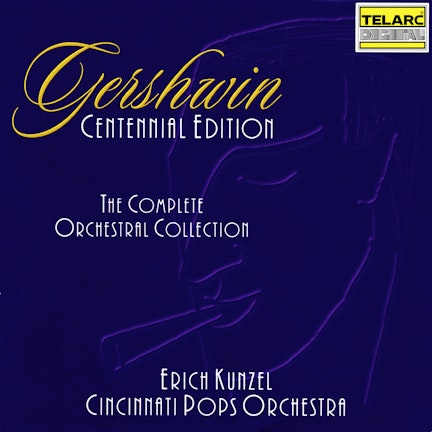
Gershwin: Centennial Edition
Complete Concerto Recordings
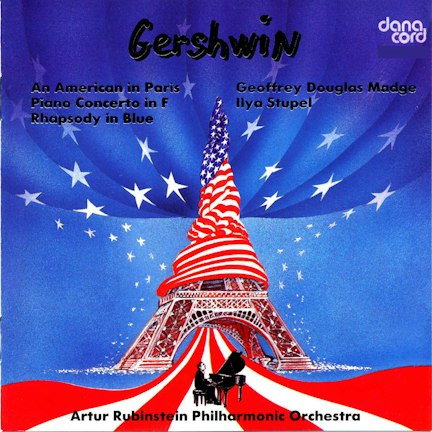
Gershwin, G.: American in Paris (An) / Piano Concerto in F Major / Rhapsody in Blue
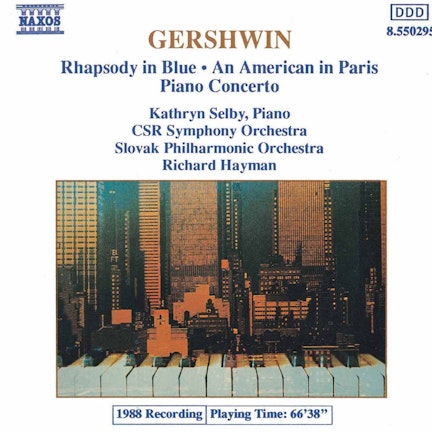
Gershwin: Rhapsody in Blue / Piano Concerto
Gershwin: Rhapsody in Blue, Variations on "I Got Rhythm" & Catfish Row
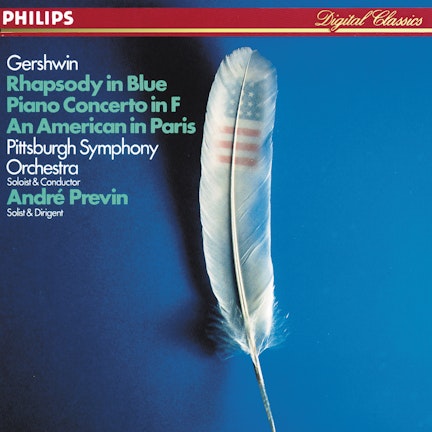
Gershwin: Rhapsody in Blue / An American in Paris / Piano Concerto in F
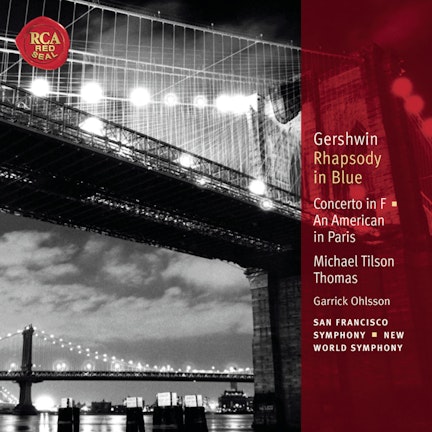
Gershwin: Rhapsody in Blue; Concerto in F; An American in Paris: Classic Library Series
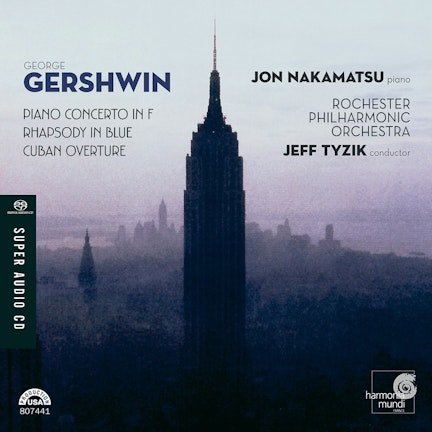
Gershwin: Piano Concerto in F, Rhapsody in Blue, Cuban Overture
Gershwin: Rhapsody in Blue; Piano Concerto; An American in Paris
Gershwin / Antheil
Gershwin: Rhapsody in Blue/Porgy & Bess Symphonic Suite etc.
Ravel: Piano Concerto in G major - Stravinsky: Capriccio - Gershwin: Piano Concerto in F major