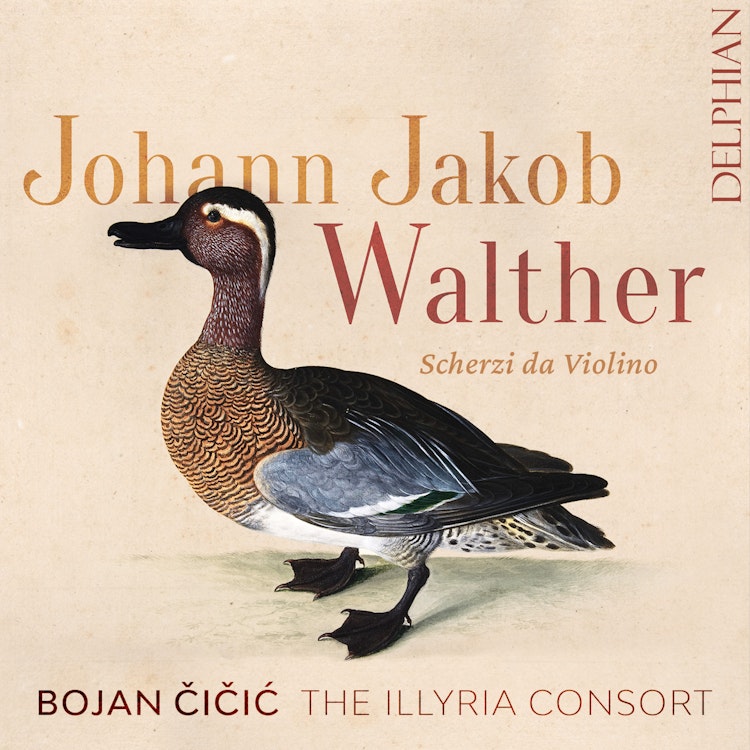
Walther's collection of sonatas aims to showcase the violin's potential to stir 'passions and affections' and his own versatility as a violinist.
Historical Context
The German-speaking lands and Italy had a well-established cultural exchange, with Italian musicians holding high positions in German courts and German musicians traveling to Italy.
Composer Biography
Johann Jakob Walther, the composer, was described by a French music lexicographer in the 1860s as 'the Paganini of his century' due to his virtuosity.
Composition History
Walther's collection of Scherzi da violino solo was first published in Dresden in 1676, with a second edition printed in Mainz in 1687.
Cultural Impact
The violin, initially associated with lower-class musicians, gained special status through its extensive use in early 17th-century music dramas like Monteverdi's Orfeo.
Historical Context
The court in Dresden during the 1670s, under Elector Johann Georg II, was a significant center for music, with a large Kapelle and a newly built opera house designed for spectacular performances.
Compositional Technique
Walther's sonatas explore a wide range of violin techniques, including bowing methods, rapid note repetitions, double stops, polyphonic passages, and arpeggios.
You might also enjoy...
Scherzi da Violino Solo, No. 1: Suite in A Major: III. Sarabanda
Corelli: Violin Sonatas Nos. 7-12, Op. 5
Mealli: 6 Violin Sonatas, Op. 3 & Op. 4
Sonatas for Violin and Basso Continuo
ANTONIO VIVALDI: Sonate a violino e basso, Opera II - sonate1/6