Johann Sebastian Bach: Himmelfahrtsoratorium BWV 11 (BWV 11, BWV 37, BWV 34)
6/24/2022, 20 Tracks, 1:01:12
Featuring
Christian Rathgeber
Christian Wagner
Felix Koch
Jasmin Maria Hörner
Julien Freymuth
Gutenberg-Kammerchor
Neumeyer Consort
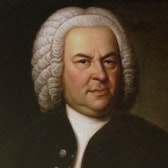
Johann Sebastian Bach
Did you know?
1/7
Composer's Artistic Vision
Johann Sebastian Bach, a deeply religious man, often signed his church music with 'Soli Deo Gloria' (Glory to God alone), reflecting his Christian inspiration.
Performer Biography
The Gutenberg Chamber Choir, founded in 2013, specializes in historical performance practice and collaborates with renowned conductors and soloists like Andreas Scholl and Masaaki Suzuki.
Performer Biography
Felix Koch, the conductor, is a professor of early music and concert pedagogy at the Mainz School of Music and director of the Collegium Musicum at Johannes Gutenberg University.
Composition History
The Ascension Oratorio (BWV 11) is believed to have been composed in 1735, with Christian Friedrich Henrici (Picander) as the likely librettist.
Compositional Technique
The Ascension Oratorio (BWV 11) uses the same festive scoring as parts of the Christmas Oratorio, including timpani and three trumpets.
Compositional Technique
Bach frequently employed 'parody art'—reusing previously composed music—as seen in the opening chorus of BWV 11, which originated from a cantata for the Saxon elector's name day.
Composition History
The cantata "Wer da gläubet und getauft wird" (BWV 37) was performed for Ascension Day in 1724, eleven years before the Ascension Oratorio.