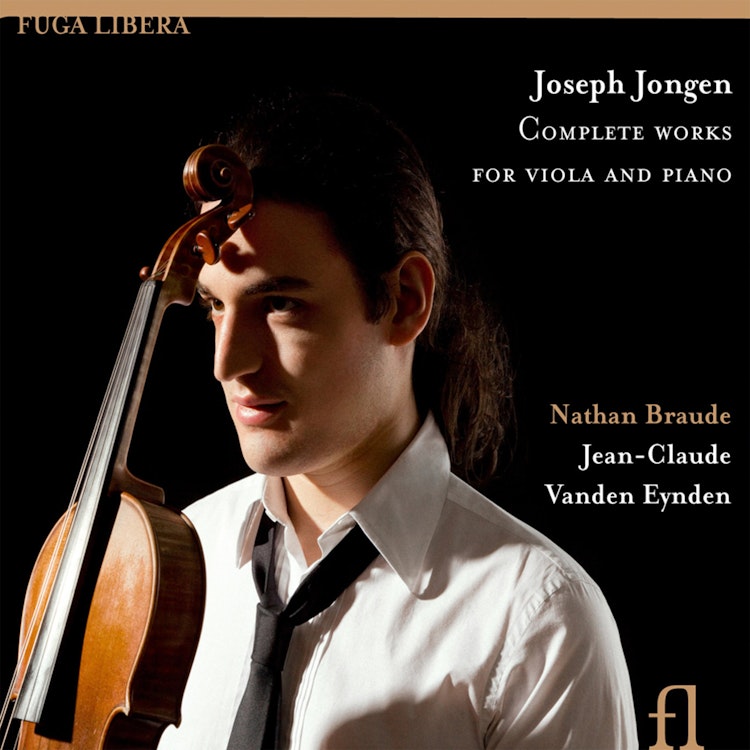
The viola held a special place for Jongen, leading him to collaborate closely with two of the era's greatest viola players, Lionel Tertis and Maurice Vieux, who inspired many of his concert works for the instrument.
Composition History
Jongen won the 'Belgian Prix de Rome' in 1897, which allowed him four years of residential studies in major European musical centers, starting with Germany.
Composer Biography
Joseph Jongen, born in 1873, showed precocious talents for improvisation and composition, quickly surpassing his composition teacher Jean-Théodore Radoux.
Composer's Artistic Vision
Jongen's musical style was a refined blend, influenced by Brahms, Richard Strauss, César Franck, d'Indy, Debussy, and Fauré, with a preference for French aesthetics over Italian music and opera.
Compositional Technique
Jongen's works for viola, particularly those dedicated to Maurice Vieux, are technically demanding, featuring double stops and extensive use of the instrument's range, while blending influences from Franck, Fauré, Debussy, and Ravel.
Historical Context
During World War I, Jongen fled occupied Belgium for London in 1914, where he became active as a pianist, organist, and conductor, and formed the 'Belgian Quartet of London'.
Performer Biography
Nathan Braude, the violist on this recording, plays a viola made by Giovanni Battista Ceruti in 1811, generously loaned by Michael Zuber.
You might also enjoy...
Hans Sitt: Works for Viola and Piano
Tabakova: Suite in Jazz Style: I. Talk
Bowen: Viola Concerto & Phantasy (The Royal Academy of Music Bicentenary Series)
SHOSTAKOVICH: IV. Allegro from Cello Sonata
Brazilian Suite No. 1 for Piano and Viola
Katherine Potter: Eight Nocturnes
Home is Where…
Pärt: Spiegel im Spiegel (Version for Viola and Piano)