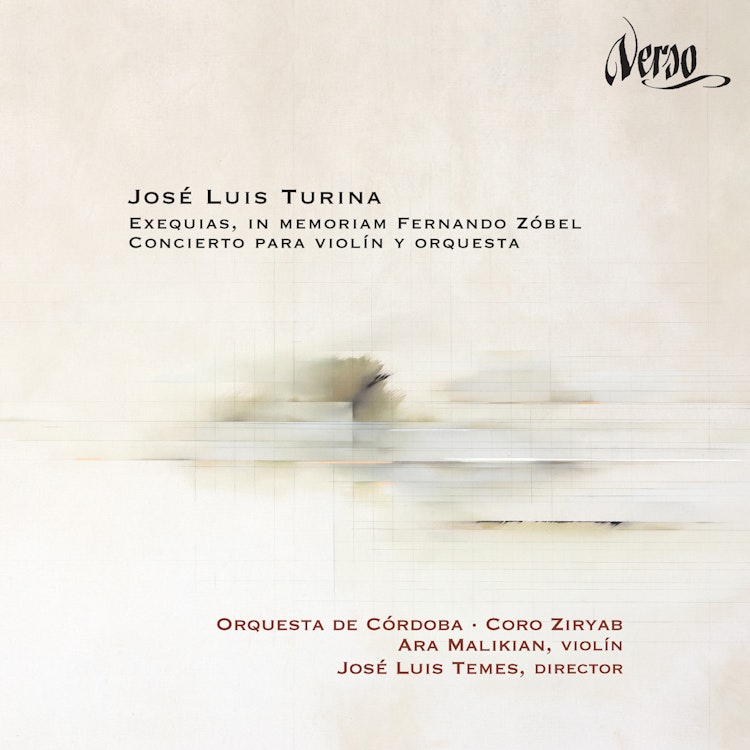
José Luis Turina: Exequias, in Memoriam Fernando Zóbel & Concierto para Violin y Orquesta
10/7/2014, 10 Tracks, 1:12:19
Featuring
José Luis Temes
Laura Llorca
Ara Malikian
Orquesta de Córdoba
Coro Ziryab
José Luis Turina
Did you know?
1/7
Compositional Technique
The second movement of the Violin Concerto uses an "endecaphonic" system, a dodecaphonic system where the note G is always absent, creating a 'hobbling' effect on the perfect geometry.
Composer Biography
José Luis Turina, one of the most engaging Spanish composers of his generation, is the grandson of the famed Joaquín Turina, a key figure in early 20th-century Spanish nationalism.
Composer's Artistic Vision
José Luis Turina's music is characterized by a synthesis of innovative exploration and solid craftsmanship, making it accessible even to listeners not typically inclined towards new musical languages.
Compositional Technique
The first movement of Turina's Violin Concerto features an original construction where the violin sings lyrically over percussion on untuned drumheads, and string instruments use noises and percussive sounds on their bodies.
Compositional Technique
For "Exequias," José Luis Turina chose an intimate, almost chamber-like requiem with a reduced orchestra and a chorus specializing in Gregorian chant, reflecting the austere nature of Fernando Zóbel.
Performer Biography
Ara Malikian, the violinist on this recording, was born in Lebanon in 1969 to an Armenian family and began playing violin at a very young age, giving his first concert at 12.
Composition History
José Luis Turina's "Exequias, in memoriam Fernando Zóbel" was prompted by the sudden death of painter Fernando Zóbel, a friend of the composer, and a commission from the Cuenca Religious Music Week.
You might also enjoy...
Russian Classics
Alchemy
In The Shade Of A Sea
Destinations
Zinn: Elie Wiesel (A Portrait) - String Quartet No. 1 - Kol Nidrei Memorial