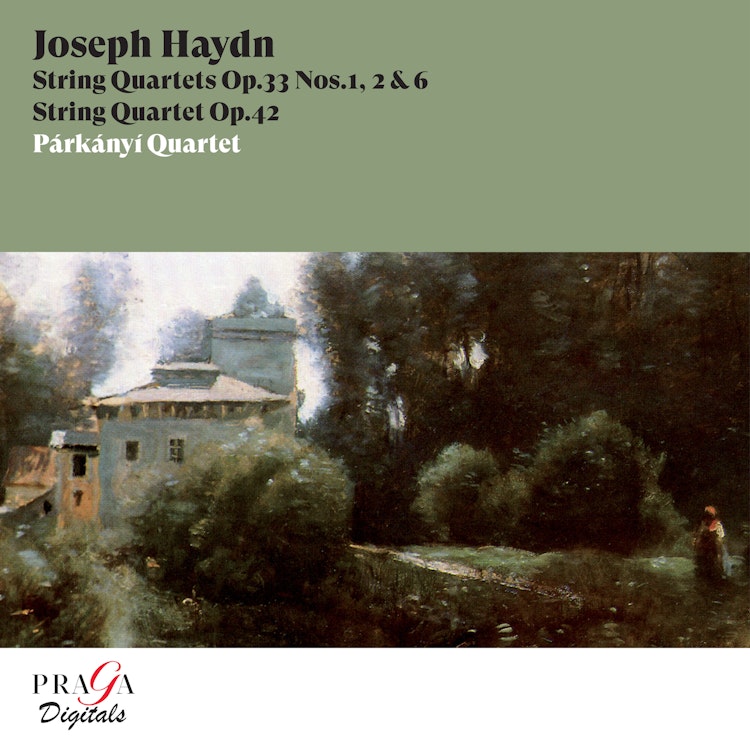
The String Quartet in D minor, Op. 42, is an isolated composition not part of any cycle, published in 1785, and is notably brief, possibly due to the wishes of its Spanish patron.
Interpretation
The Párkányi Quartet, the performers on this album, aim to highlight the modernism of Haydn's works and avoid Romantic interpretations, connecting his style directly to 20th-century Classicism.
Cultural Impact
The impact of Haydn's Op. 33 quartets was so significant that Mozart responded by composing his Six Quartets dedicated to Haydn.
Critical Reception
Haydn himself asserted that his Op. 33 quartets were "of a thoroughly new and particular genre," leading to much scholarly discussion.
Performer Biography
Three founding members of the Orlando String Quartet, which won first prize at the Carlo Jachino International String Quartet Competition in 1976, reunited with a new cellist to form the Párkányi Quartet.
Compositional Technique
Haydn's Op. 33 quartets feature humor and inventiveness in rhythm, phrasing, and structural artifices, such as replacing the minuet with a scherzo and using monothematic sonata forms.
Composition History
Haydn announced his Op. 33 string quartets to his patrons in a circular letter in December 1781, offering them a manuscript copy on a preview, subscription basis.
You might also enjoy...
Haydn: Complete String Quartets, Vol. 2
Haydn: Complete String Quartets, Vol. 3
Haydn: String Quartets Nos. 2 & 8
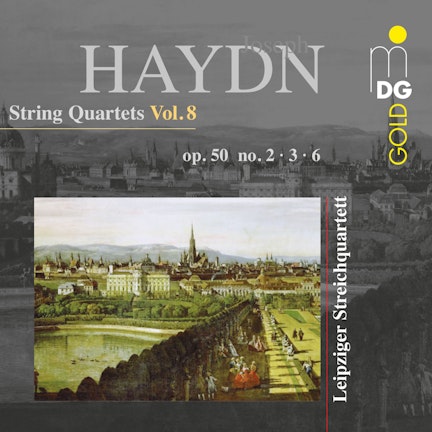
Haydn: String Quartets, Vol. 8
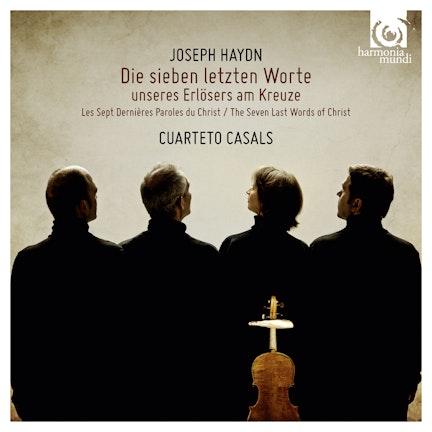
Haydn: The Seven Last Words of Christ, Hob.XX:2 (Die sieben letzten Worte unseres Erlösers am Kreuze, Hob.XX:2)
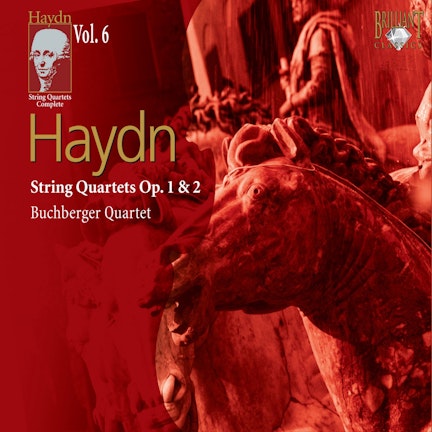
Haydn: String Quartets, Op. 1 & 2
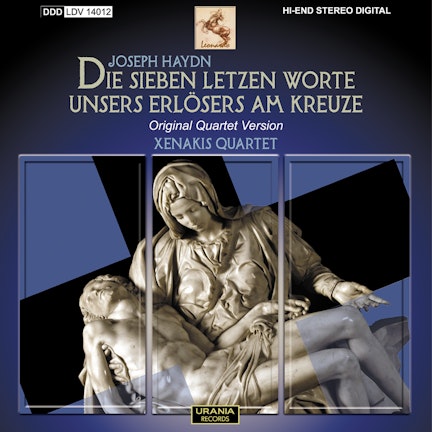
Haydn: Die sieben letzten Worte unseres Erlösers am Kreuze