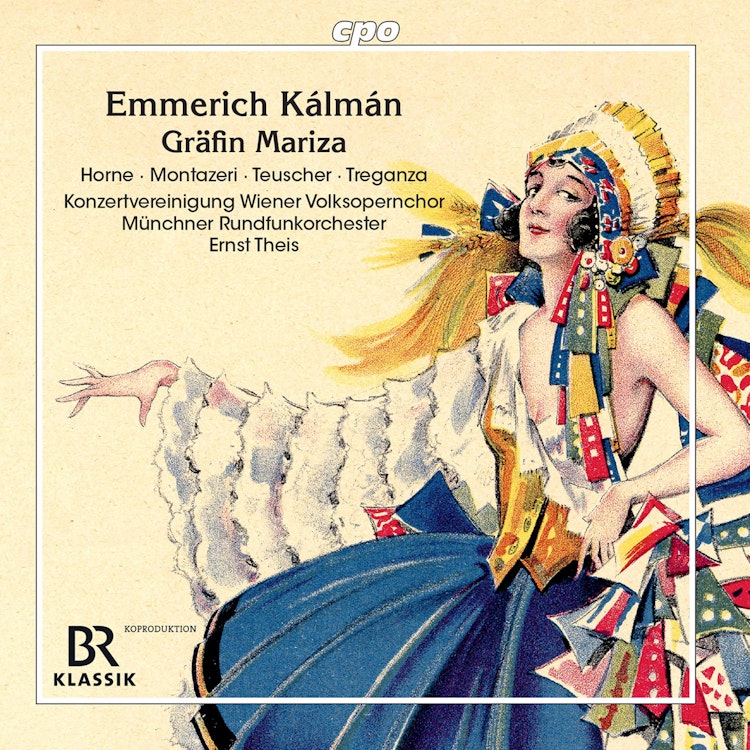
The "Spielduett" (Play Duet) in Act II, including the melodrama and concluding waltz, is presented here in its uncut version for the first time, as it is often shortened in performances.
Composition History
The famous Csárdás "Komm, Zigany!" was composed at the request of Hubert Marischka, the director of the Theater an der Wien, who was disappointed with the original role of Tassilo.
Critical Reception
The premiere of "Gräfin Mariza" on February 28, 1924, at the Theater an der Wien was a "smash hit" that made even skeptics applaud hysterically, despite lasting almost six hours.
Critical Reception
In America, "Countess Maritza" was praised by New York Times critic Brooks Atkinson for its "substantial quality" and music "quite superior to the thin, conventional scores usual to routine musical comedy."
Composer's Artistic Vision
Emmerich Kálmán, the composer of "Gräfin Mariza," desired music that flowed from stories, with great emotion, contrast, and a simple, primitive plot full of love and romance.
Compositional Technique
The character Baron Koloman Zsupán is an example of operetta irony, as he is a fictitious character who appears to have stepped directly from Johann Strauss's "The Gypsy Baron" into "Gräfin Mariza."
Cultural Impact
"Gräfin Mariza" was particularly popular in Central Europe after World War I because it evoked the lost paradise of the Austro-Hungarian monarchy with its pomp and uniforms.
You might also enjoy...
Shostakovich: Moscow, Cheryomushki
Lehár: Cloclo (Live)
Mozart: Zaide (Das Serail), KV 344
Lehár: Die lustige Witwe
Orff: Oedipus der Tyrann
Lehár: Das Land des Lächelns [1994 Digital Remaster]
Mozart: Die Entführung aus dem Serail
Strauss: Der Carneval in Rom
Mozart: Die Entführung aus dem Serail, K. 384 (The Abduction from the Seraglio)