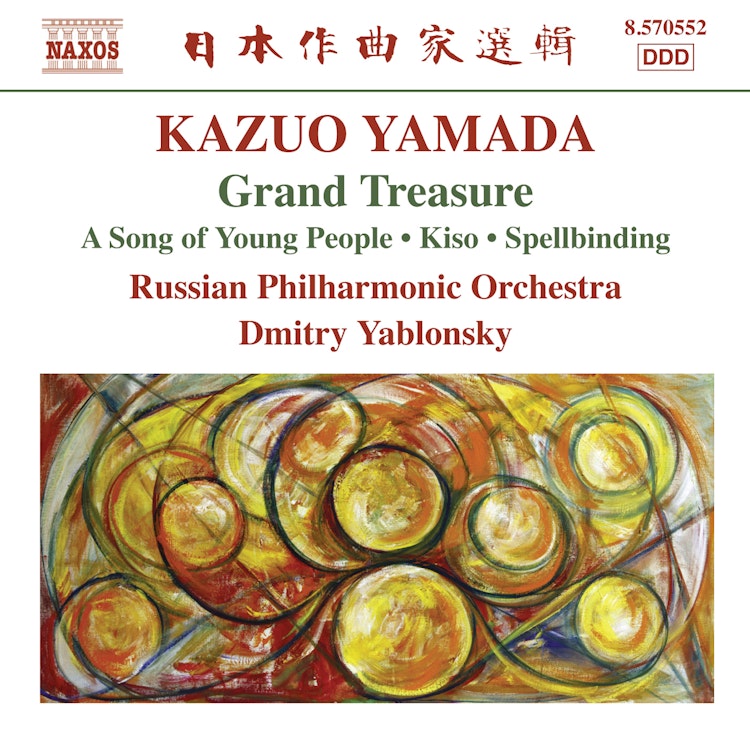
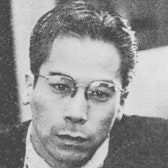
Yamada, along with other Japanese composers and a music critic, formed the Prometheus Group in opposition to the Japanese nationalism that emphasized Japanese and Asian elements in orchestral works.
Performer Biography
Dmitry Yablonsky, the conductor, made his orchestral debut as a cellist and conductor at age nine, performing Haydn's Cello Concerto in C major.
Performer Biography
Dmitry Yablonsky, the conductor, was born into a musical family; his mother is pianist Oxana Yablonskaya and his father, Albert Zaionz, was principal oboist in the Moscow Radio Orchestra for thirty years.
Composer Biography
Yamada made his conducting debut in 1942 as the full-time conductor of the Japan Symphony Orchestra, which he helped transform into the present-day NHK Symphony Orchestra.
Composer's Artistic Vision
Yamada's compositional style was influenced by diverse figures such as Richard Strauss, Béla Bartók, Paul Hindemith, and 20th-century French music, but his most significant influence was Mahler.
Compositional Technique
In his work Grand Treasure, Yamada uses shomyo (chanting of Buddhist hymns) of the Tendai sect and incorporates instruments like the horagai (conch horn), mokugyo (slit-drum), and dora (tam-tam) to recreate temple sounds.
Composer Biography
Kazuo Yamada, a Japanese composer and conductor, studied composition under Klaus Pringsheim, a pupil of Mahler, and conducting under Joseph Rosenstock.
You might also enjoy...
Fukai: Chantes De Java / Creation / Quatre Mouvements Parodiques
Schwartz & Broadstock: Orchestral Works
Christopher Tyler Nickel: Concertos for Oboe
Rüdiger Beckemeier: Zwei Liebende, drei Wellen, Raum