The development of new church music forms in Hamburg, particularly the oratorio, was significantly influenced by the city's opera, which provided both personnel and a 'theatrical style' model.
Composition History
The oratorio Der Gottliebenden Seelen Wallfahrt by Georg Bronner, despite extensive preparations, was prohibited from performance by order of the ministry at the senate in 1710.
Recording & Production
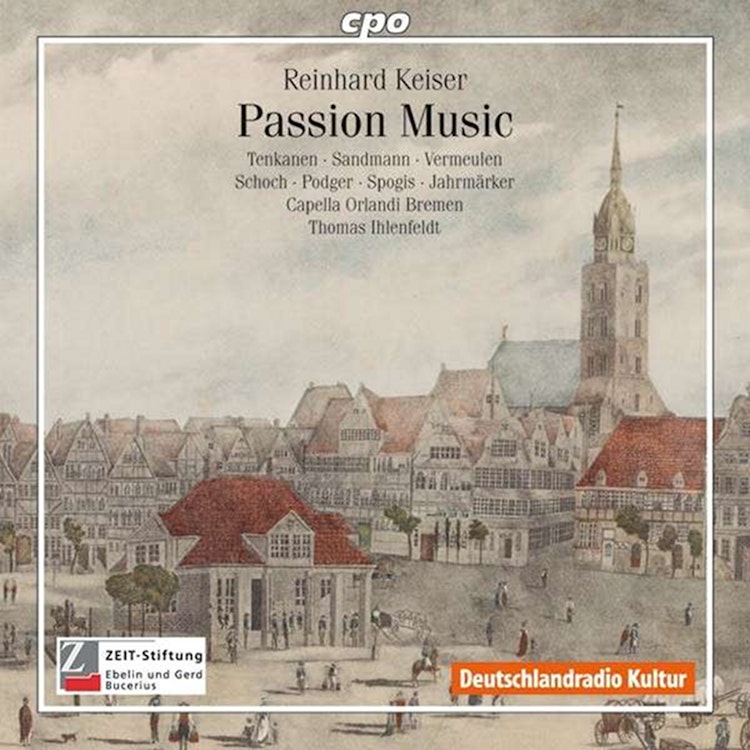
This recording is part of the 'Musica sacra Hamburgensis 1600-1800' series, which aims to inspire interest in Hamburg church music by presenting often unknown compositions performed by renowned early music ensembles.
Critical Reception
The performance of Keiser's dramatic oratorio Der blutige und sterbende Jesus in 1704 caused controversy, with a manuscript note stating that 'many felt offended or even scandalized by it.'
Historical Context
Around 1700, Hamburg experienced a broad spectrum of musical styles, ranging from traditional church music to innovative forms, influenced by a feud between Pietists and orthodox Lutherans.
Performer Biography
Capella Orlandi Bremen, the ensemble on this recording, is dedicated to rediscovering Northern European Hanseatic music, with a significant focus on the music of the Hamburg Opera, including premiere recordings of works by Reinhard Keiser.
Compositional Technique
Reinhard Keiser's oratorio Der blutige und sterbende Jesus was innovative for its time, as it eliminated the Evangelist, featured characters speaking theatrically, and introduced an allegorical figure.
You might also enjoy...
C.P.E. Bach: Hamburger Quartalsmusiken
Graupner: Christmas Cantatas
Bernhard, C.: Sacred Harmonies
Cannabich: Electra
Damian Močnik: Johannes-passion
„passio Domini nostri Iesu Christi secundum Ioannem“
(„das Leiden unseres Herrn Jesus Christus nach Johannes“)
für Soli, Chor, Orgel und Orchester
Berkeley, M.: Baa Baa Black Sheep
Bach, J.S.: St. Matthew Passion
Moniuszko: Widma
Drude: Christmas Oratorio
Telemann: Die Auferstehung, TWV 6:7 & De danske, norske og tydske undersåtters glæde, TWV 12:10
Stölzel: Der für die Sünde der Welt gemarterte und sterbende Christus
Moritz Eggert: Die Tiefe des Raumes (Ein Fußballoratorium) [Live]