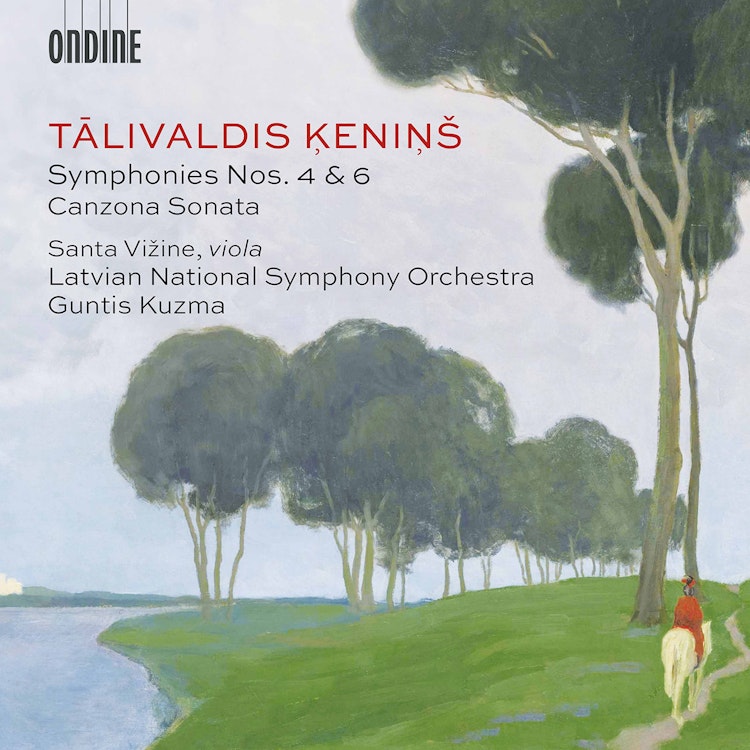
The Fourth Symphony and Canzona Sonata are linked to the Latvian Song Festival tradition, which began in 1873 under Tsarist Russian rule and became a marker of national identity.
Composer Biography
Tālivaldis Ķeniņš' father, Atis Ķeniņš, was a Neoromantically inclined poet and politician, and his mother, Anna Rūmane-Ķeniņa, was a notable social activist.
Composer Biography
Tālivaldis Ķeniņš, one of Latvia's most important composers, was born in Latvia, educated in France, and lived the remainder of his life in Canada.
Composer's Artistic Vision
Tālivaldis Ķeniņš believed that truth and value in music come through logic and rationality, leading to a laconic style of expression, yet he remained a Latvian composer at his core.
Composition History
Tālivaldis Ķeniņš' Fourth Symphony was commissioned by the Canada Arts Council for the Third Latvian Song Festival in Europe, held in Köln in 1973, to commemorate the first song festival's centenary.
Compositional Technique
In his Sixth Symphony, 'Sinfonia ad fugam', Tālivaldis Ķeniņš declares his love for J.S. Bach, incorporating extensive polyphony, fugues, fugato, and canon, inspired by Bach's C sharp minor fugue from the Wohltemperiertes Klavier.
Composer Biography
Tālivaldis Ķeniņš studied composition with Tony Aubin, musical theory with Simone Plé-Caussade, and analysis with Olivier Messiaen at the Paris Conservatory.