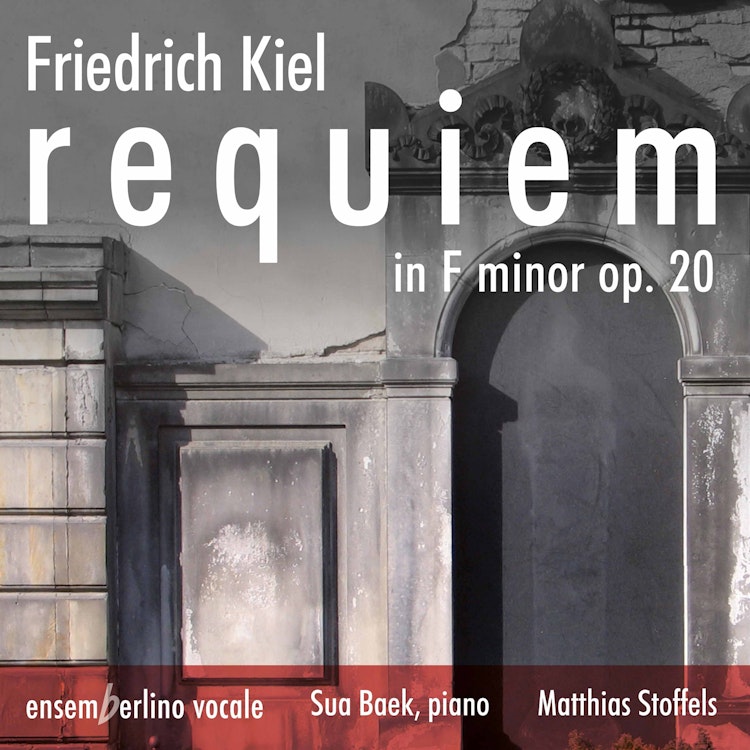
Friedrich Kiel, a Protestant, explicitly conceived his Requiem in F minor as a work for the concert hall, not as music for a church funeral Mass.
Compositional Technique
Kiel's Requiem in F minor is a self-contained work that interprets the text through large formal structures, distinctive key changes, and tonal differentiations.
Critical Reception
The Berlin Singakademie initially rejected Kiel's Requiem, finding it 'harmoniously too bold and vocally too difficult'.
Composer Biography
Friedrich Kiel, the composer, was considered by his contemporaries to be an outstanding composer, mentioned in the same breath as Johannes Brahms.
Cultural Impact
Kiel's Requiem in F minor is considered a significant milestone in Protestant Requiem settings and a musical link between the Catholic settings of Mozart and Verdi.
Composition History
Kiel's Requiem in F minor was composed in 1859/1860 for King Friedrich Wilhelm IV of Prussia, whose death was expected after several strokes.
Interpretation
This recording of Kiel's Requiem features piano accompaniment, inspired by the 'silent performances' of the Stern'scher Gesangverein, which introduced new works to listeners with piano.