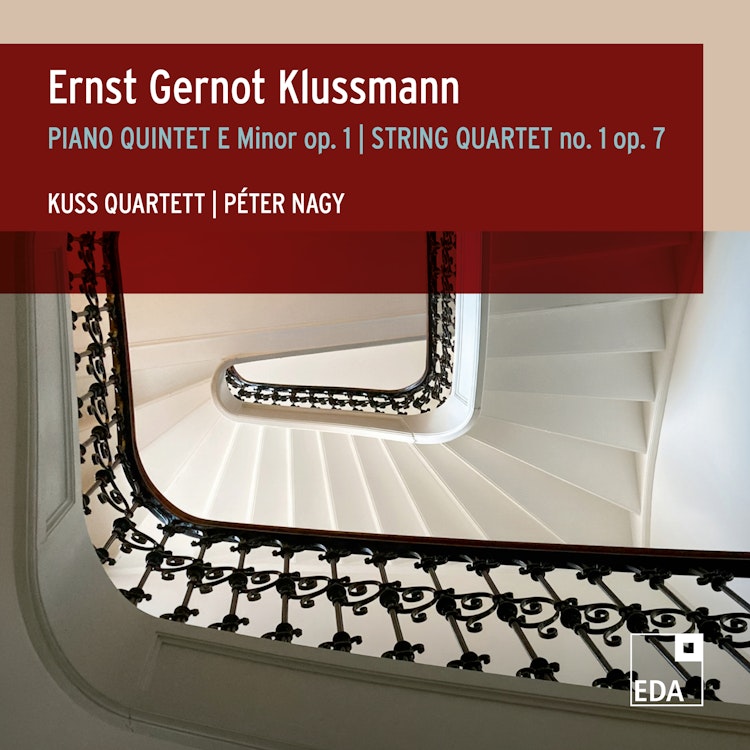
Klussmann: Piano Quintet E Minor, Op. 1 / String Quartet No. 1, Op. 7
6/6/2025, 9 Tracks, 1:04:09
Featuring
Péter Nagy
Jana Kuss
Oliver Wille
William Coleman
Mikayel Hakhnazaryan
Kuss Quartett
Ernst Gernot Klussmann
Did you know?
1/7
Historical Context
Klussmann joined the Nazi party in 1933, a decision he later claimed was strategic to protect his family from harassment by colleagues at the Cologne Music School.
Composer Biography
Klussmann was dismissed from his directorship in 1945 due to his Nazi party membership but was reinstated in 1948 after being classified as a 'fellow traveler' (Mitläufer).
Performer Biography
The Kuss Quartet, the ensemble performing on this album, was the first German string quartet to receive the legendary 'Paganini Quartet' of Stradivari instruments on loan from the Nippon Music Foundation in 2019.
Compositional Technique
From the mid-1950s, Klussmann began incorporating dodecaphony (twelve-tone technique) into his compositions, seeing it as a compositional decision that aligned with his contrapuntal thinking.
Composer's Artistic Vision
Klussmann explicitly used his own music as proof that his aesthetic ideas did not align with the National Socialists, citing negative reviews and his strong connection to Gustav Mahler.
Composition History
This album features the first-ever recording of compositions by Ernst Gernot Klussmann, whose important works have remained unpublished and unpremiered.
Composer Biography
Ernst Gernot Klussmann was a prominent figure in Hamburg's musical life from the 1940s until his death in 1975, but his artistic work has been largely neglected.
You might also enjoy...
Klussmann: Piano Quintet E Minor, Op. 1 / String Quartet No. 1, Op. 7
Romano Crivici: Ebb & Flow
Halffter: Chamber Music, Vol. 3
Boris Papandopulo: The Complete String Quartets
Reinaldo Moya: Hearing It Getting Dark
Liza Lim: String Creatures
Simon Christensen: Manifest (But There's No Need to Shout)
Anton Rubinstein: String Quartets op. 17,3 and op. 17,2
Reich: WTC 9/11: I. 9/11/01
Wolf: Italian Serenade & String Quartet in D Minor
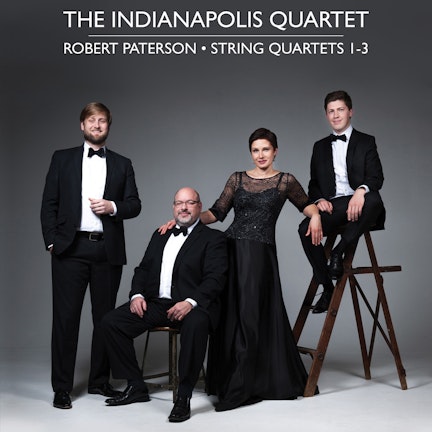
Robert Paterson: String Quartets Nos. 1-3
Bach: Chorale "Ach bleib bei uns, Herr Jesus Christ"