Kodály's Sonata for Solo Cello, composed in 1915, uniquely employs scordatura—retuning the instrument's strings to expand its harmonic and tonal range.
Composer Biography
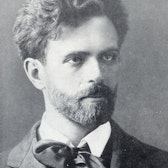
Zoltán Kodály, a Hungarian composer, studied German and Hungarian at Pázmány University in Budapest while also taking composition lessons.
Composer's Artistic Vision
Zoltán Kodály's main goal was to establish a national Hungarian musical tradition and integrate it into a recognizable Hungarian art music form.
Composition History
Kodály's Duo for Violin and Cello, completed in 1914, was initially met with a lukewarm reception but later represented Hungary at the 1924 International Society for Contemporary Music Festival.
Performer Biography
Hellen Weiß, the violinist on this album, won First Prize at the International Radio Competition for Young Musicians 'Concertino Praga' in 2004 and plays a Matteo Goffriller violin from 1698.
Composition History
György Ligeti's Sonata for Solo Cello has a lengthy genesis; its first movement was written in 1948, but the complete work was not publicly performed until 1979 because the communist-run Composers' Union deemed it too modern.
Critical Reception
Kodály's Sonata for Solo Cello quickly became recognized as the most significant work for solo cello since Bach's Cello Suites, written two centuries earlier.
You might also enjoy...
La Kobsa
Cello Sonata in C-Sharp Minor, Op. 134: I. Andante (Completed by V. Blok)