Kodály's chamber works for string instruments, including the Sonata for solo cello, push the techniques of their chosen instruments to the limit, fusing classical forms with new harmonic and melodic resources from folk music.
Historical Context
Kodály and Bartók, as professional ethnomusicologists, uncovered authentic Hungarian folk music by recording melodies in the countryside, recovering a national identity as Hungary sought liberty from the Austrian Empire.
Performer Biography
Natalie Clein won the BBC's Young Musician of the Year and was the first British winner of the Eurovision Competition for Young Musicians in 1994, at age sixteen.
Composer's Artistic Vision
Kodály believed that one could approach universal humanity only through one's own national characteristics, aiming to bring Hungary's musical heritage to Hungarians.
Instruments
Natalie Clein, the cellist on this recording, plays on the 'Simpson' Guadagnini cello, made in 1777.
Compositional Technique
In the Sonata for solo cello, Kodály boldly extends his tonal palette using scordatura, retuning the cello's C string to B and G string to F sharp to create different harmonies and tone colors.
Composer Biography
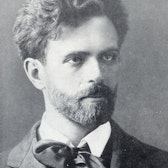
Zoltán Kodály, the composer, was a protégé and colleague of Ernő Dohnányi and a lifelong friend of Béla Bartók, with whom he collected folksongs in remote Hungarian villages.
You might also enjoy...
Prokofiev & Kabalevsky
Schubert: Sonate 'Arpeggione'
Music for Cello and Piano
Mendelssohn, Felix: Cello Sonata No. 2 / Ben-Haim, P.: Songs Without Words (The Cantorial Voice of the Cello)
Kodály: Sonatas for Cello and Piano
KODALY: Three Chorale Preludes / Cello Sonatas Opp. 8 and 4