Charles Koechlin believed that musical form should not be dictated solely by tradition, but that each musical scenario demanded its own appropriate form.
Compositional Technique
Koechlin's musical language eclectically embodies traditional functional harmony, impressionism, free atonality, and even quasi-twelve-tone writing.
Performer Biography
Ralph van Raat, the pianist on this recording, studied piano with Ton Hartsuiker and Willem Brons, and musicology at the University of Amsterdam, concluding both with distinction.
Recording & Production
This recording was made possible in part by the Fortis MeesPierson Award of the Concertgebouw, Amsterdam.
Composition History
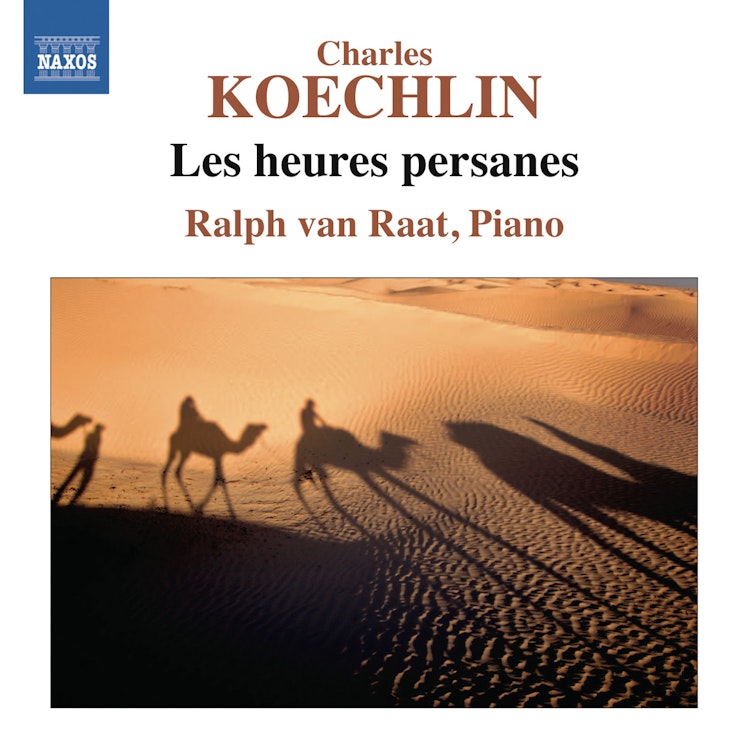
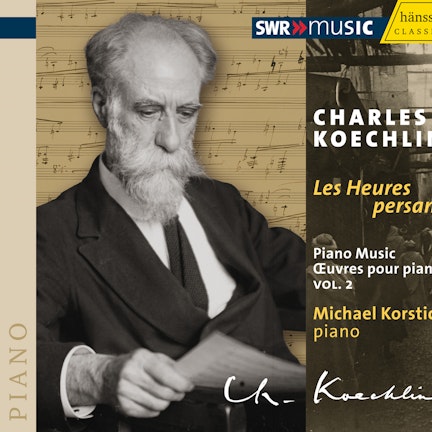
The inspiration for Charles Koechlin's "Les heures persanes" came mainly from Pierre Loti's diary "Vers Ispahan," which chronicled a journey through former Iran.
Compositional Technique
In "Les heures persanes," Charles Koechlin used polytonality (music in different keys simultaneously) and atonality (music without a tonal center) to evoke the scents and colors of distant lands.
Composer Biography
Charles Koechlin, the composer, studied at the Paris Conservatoire National Supérieur de Musique, where Gabriel Fauré was one of his most notable teachers.
You might also enjoy...
Kitsch-Musik/IV. Moderato
Night Studies
Fredrik Schwenk: Sieben Neue Kinderszenen für Klavier
Crumb: Makrokosmos I
I. Gavotte
Mompou: Música Callada
Tchaikovsky: Children's Album, Op. 39: No. 21, Sweet Dreams